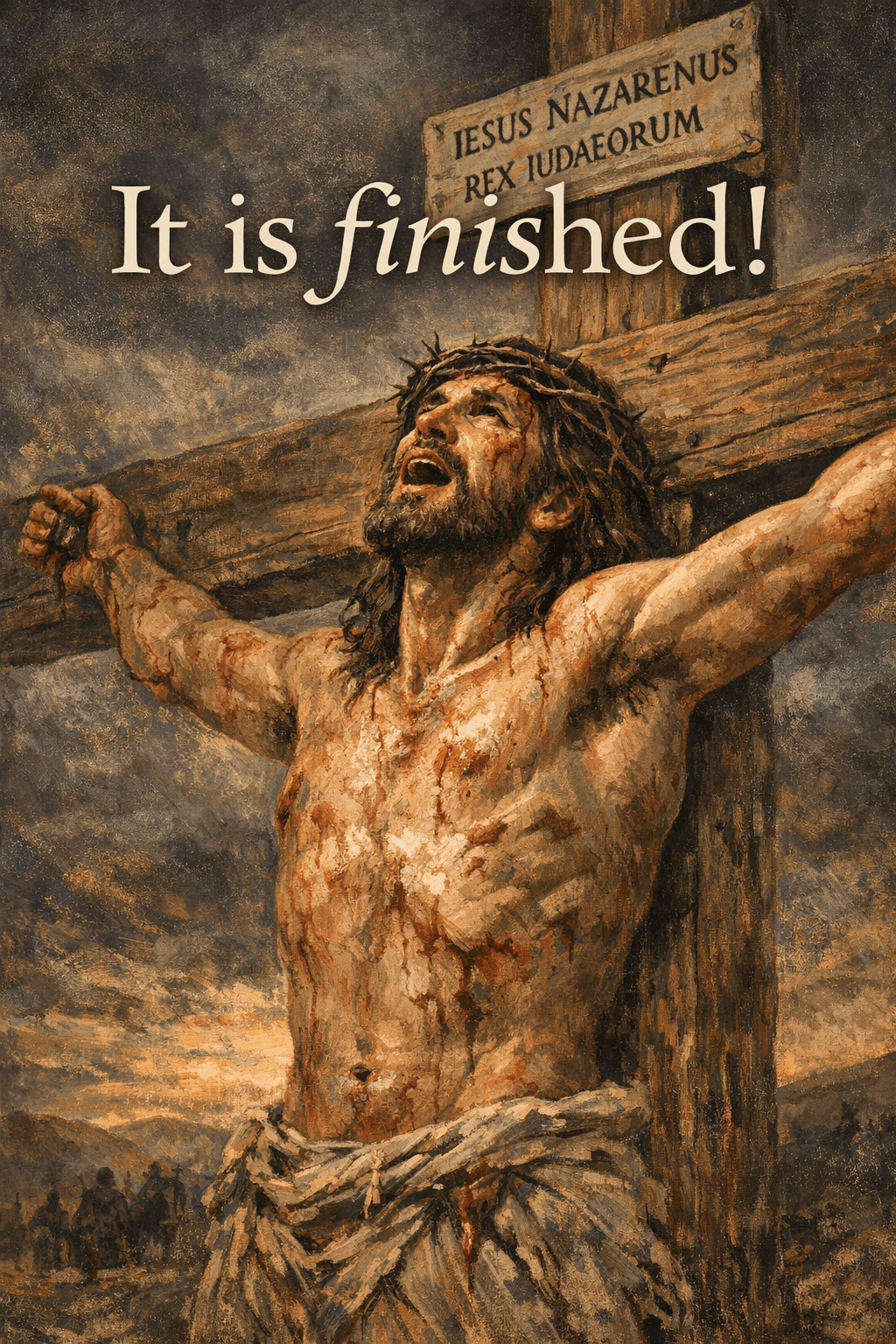
There are few things more enduring in the life of the church than a good sermon illustration. They travel lightly, lodge deeply, and—if we are not careful—calcify into “facts.” Every Easter, one such illustration resurfaces with the reliability of the liturgical calendar: the claim that Jesus’ final cry from the cross, tetelestai (“It is finished”), was a technical term stamped on ancient receipts to mean “paid in full.” It is a tidy metaphor, emotionally satisfying, and theologically convenient. It is also, as it turns out, not true.
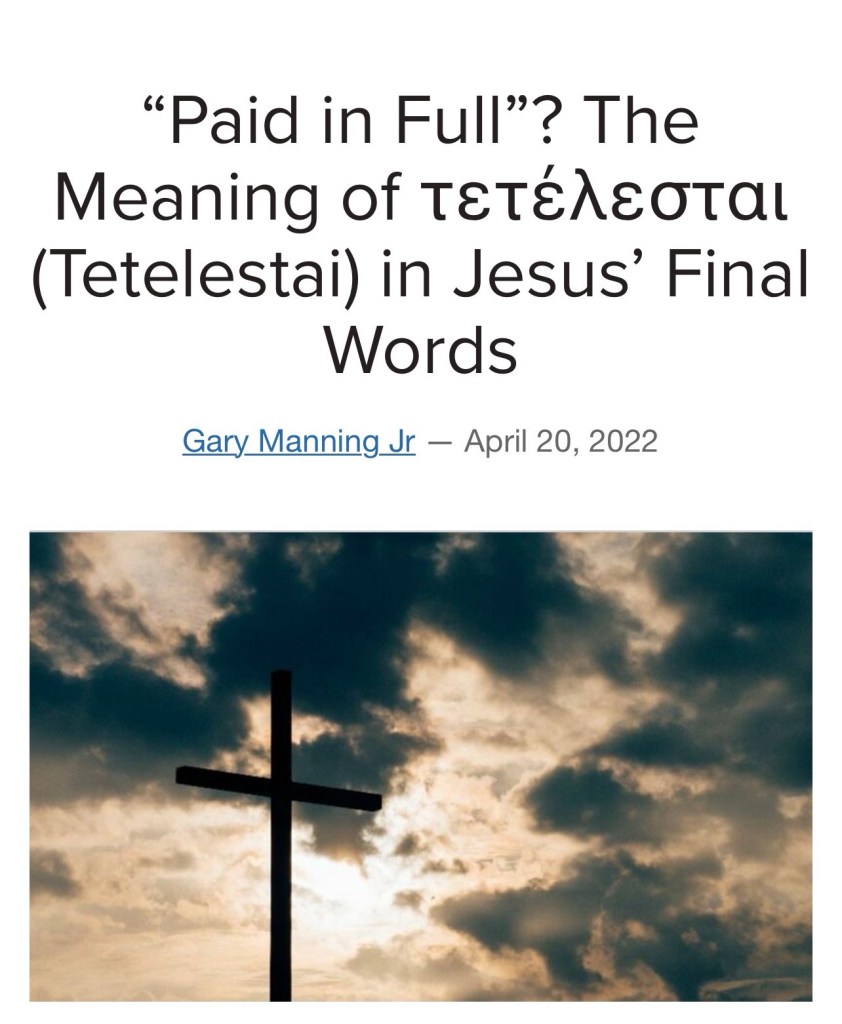
Recently, a careful scholar revisited the papyrological evidence behind this claim. His analysis was not only persuasive; it was a model of how responsible biblical scholarship ought to proceed. But the analysis itself invites a second look—not because it is flawed, but because it reveals something about the way we handle Scripture, evidence, and the stories we want to be true. Thus this essay: a scholarly analysis of a scholarly analysis of the claim by Gary Manning, Jr (“the scholar”).
I. The Anatomy of a Good Scholarly Correction
The first analysis begins where all good historical work begins: with the primary sources. The scholar examined the 315 tariff receipts from Roman‑era Egypt that supposedly contained the word tetelestai. What he found was something far more mundane and far more illuminating.
Most receipts contained only the abbreviation tetel. On the rare occasions when the tax collectors wrote the word in full, it was not tetelestai at all, but tetelonetai—a verb related to telones, “tax collector,” meaning “tax has been paid.” In other words, the receipts were not abbreviating the Johannine verb; they were abbreviating a tax‑specific term. The similarity in spelling was coincidental, not conceptual.
This is the kind of discovery that delights philologists and disappoints preachers.
The scholar then went further. He surveyed receipts for purchases, loans, and debts—places where one might expect a “paid in full” notation. None used tetelestai. None used tetel. None used any form of teleo to indicate a settled account. The supposed meaning simply does not exist in the ancient record.
The conclusion was clear: the “paid in full” interpretation is a modern invention, born in 1896 with the publication of the papyri, popularized in 1915 by Moulton and Milligan, and canonized in twentieth‑century preaching. It has no ancient pedigree.
II. The Method Behind the Meaning
What makes the original analysis compelling is not merely the conclusion but the method. It demonstrates several virtues that biblical scholarship desperately needs:
Primary‑source fidelity: The scholar did not rely on secondary summaries but examined the papyri themselves.
Lexical restraint: He refused to force a theological meaning onto a verb that does not bear it.
Historical honesty: He traced the modern origin of the claim rather than assuming antiquity.
Contextual coherence: He interpreted tetelestai within the narrative and theological world of the Gospel of John.
This is scholarship at its best: patient, precise, and unafraid to disappoint a beloved illustration for the sake of the truth.
III. Why We Wanted the Claim to Be True
But the analysis also reveals something about us—our hermeneutical instincts, our theological desires, and our susceptibility to elegant oversimplifications.
The “paid in full” interpretation is attractive because:
It offers a transactional clarity that feels spiritually reassuring.
It aligns with certain atonement models familiar in Western Christianity.
It gives preachers a concrete image to proclaim on Good Friday.
It feels like a secret “background fact” that unlocks the text.
In other words, it scratches the itch for certainty, simplicity, and cleverness.
But Scripture rarely rewards those instincts. John’s Gospel, in particular, resists reduction. It traffics in layered meanings, symbolic depth, and theological resonance. It invites contemplation, not slogans.
IV. What John Actually Says
When we set aside the modern myth and listen to John on his own terms, the meaning of tetelestai becomes richer, not poorer.
John has been preparing us for this moment:
“My food is to do the will of him who sent me and finish his work” (4:34).
“The works the Father has given me to finish testify about me” (5:36).
“I have finished the work you gave me to do” (17:4).
In John 19:28–30, the evangelist weaves together two strands:
- Jesus’ mission is completed. The perfect tense of tetelestai signals a work brought to completion with enduring effect.
- Scripture is fulfilled. John uses a related verb (teleiothe) to describe the fulfillment of Scripture in the same breath.
This is not a financial metaphor. It is a theological declaration: The mission is complete. The Scriptures are fulfilled. The hour has come.
The truth is not less powerful than the myth. It is more demanding.
V. The Value of a Meta‑Analysis
So why analyze an analysis? Because the way we correct a myth can teach us as much as the myth itself.
This second layer of reflection reveals: -how easily modern assumptions infiltrate ancient texts
-how scholarship can serve the church by clarifying rather than embellishing
-how the desire for tidy metaphors can obscure the Gospel’s deeper beauty
-how truth, even when less dramatic, is always more trustworthy
A scholarly analysis of a scholarly analysis becomes, in the end, a meditation on intellectual humility.
VI. Conclusion: The Beauty of What Is Actually Finished
When Jesus says tetelestai, he is not stamping a receipt. He is completing a mission. He is fulfilling Scripture. He is bringing to its climax the long arc of God’s redemptive work.
The modern metaphor may be clever, but the ancient truth is better.
What is finished is not a transaction.
What is finished is the work of love.
 PENnED
Leave a comment