36 Whoever believes in the Son has eternal life, but whoever rejects the Son will not see life, for God’s wrath remains on them.
The reason why John the Baptist gives way to Jesus is because Jesus is the Messiah, God’s anointed Savior, and he is not. People may trust someone else to save them—perhaps Mary, the mother of Jesus—but it’s quite clear that eternal life can be had only through faith in the Son.
To have eternal life, one must believe in Jesus who alone is the way,thetruth, andthelife(John 14:6).
29 “Sovereign Lord, as you have promised, you may now dismissyour servant in peace. 30 For my eyes have seen your salvation, 31 which you have prepared in the sight of all nations: 32 a light for revelation to the Gentiles, and the glory of your people Israel.”
Simeon’s praise is a beautiful expression of that wonderful feeling that arise from knowing that something of utmost importance has been fulfilled in his lifetime. Simeon saw the Lord’s provision for salvation when he saw Jesus. The coming of Jesus, “the Lord’s Messiah,” was a onetime event. But today you, too, can see and experience—if you have not yet seen and experience— the Lord’s salvation if you put your faith in Jesus.
Although “the kingdom of God is not a matter of eating and drinking,” Christians have quarreled over the issue of what or what not to eat or drink. What I find interesting is how the Apostle began in this chapter: “1 Accept the one whose faith is weak, without quarreling over disputable matters. 2 One person’s faith allows them to eat anything, but another, whose faith is weak, eats only vegetables. “
In my experience, it is often the “weak” that judges the “strong”(?) for eating and drinking what the former believes to be bawal(Tagalog for “forbidden”). But in the end, it is the “strong” in faith that are expected to give way. It sounds unfair, but it makes sense—it is the strong, who thinks broadly, that can understand a weak sister or brother.
What is it that the Apostle Paul is pressing on to take hold of? What is the prize he is trying to win? He tells us: “I want to know Christ—yes, to know the power of his resurrection and participation in his sufferings, becoming like him in his death, and so, somehow, attaining to the resurrection from the dead”(vs. 11-12). Knowing Christ, which to Paul meant experiencing the power of Christ’s resurrection and which in turn presupposes sharing in his suffering and death, is the thing that Paul is striving to attain. Did he mean all this to be taken literally? I think so. Further down Paul speaks of “heaven” and the transformation of our “lowly bodies” into “glorious body” (vs. 20-21).
Does “pressing on” mean that Paul worked so hard to win the eternal prize? It does appear that way, but we have to see his efforts in the context of “the righteousness that comes from God on the basis of faith” (v.9). This is another instance in Philippians where we see works in response to God’s grace go hand in hand. The other is found in 2:12-13: ”work out your salvation with fear and trembling, for it is God who works in you.”
We’ve been saved not by works but we’ve been saved to do good works (Ephesians 2:8-10).
“When I saw him, I fell at his feet as though dead. Then he placed his right hand on me and said: “Do not be afraid. I am the First and the Last” (v.17).
What are these comforting and assuring words for? Are they meant to calm John who has just seen an apparition? Or, is to bring encouragement to him and those that consider him a “brother and companion in the suffering and kingdom and patient endurance that are ours in Jesus” (v. 9). Or, both?
Whatever the case may be, the second option is the one that would truly benefit us. A life wholly committed to Christ can be hammered by suffering, but we are not to be afraid. Why? Because the One we follow has already won for us the victory over suffering and, yes, even death! Hear the words of Jesus, the Son of Man: “I am the Living One; I was dead, and now look, I am alive for ever and ever! And I hold the keys of death and Hades” (v.18).
If you follow the One who is victorious, you will be a victorious one.
“Peace I leave with you; my peace I give you. I do not give to you as the world gives. Do not let your hearts be troubled and do not be afraid” (v. 27).
The peace he gives, Jesus says, is different from the peace the world gives. How is it different? In a big way! Jesus’ peace does not end when there is chaos or hostility. It does not end even in death! Why? Because the peace that Jesus gives is wholeness of life for all eternity: “Because I live, you also will live” (v. 19).
But to whom does Jesus give his peace? It is given to the disciples, then and now. If you believe in Jesus and love him then the promise is for you as well. How do we know we love him? Jesus says, “Whoever has my commands and keeps them is the one who loves me” (v. 21).
If you have Jesus’ peace in you, a piece of heaven is in you.
“All Scripture is God-breathed and is useful for teaching, rebuking, correcting and training in righteousness,so that the servant of Godmay be thoroughly equipped for every good work” (vs. 16-17). This is one of the most quoted verses in the Bible. Scripture is useful but it can also cause the Body of Christ to be divided due to disagreements on how some Scripture texts should be understood.
However, regardless of how we interpret controversial Scripture texts, I think we would all agree that although Scripture is “God’s word,” it is not God. When as believers we see our unity in Christ and commitment to him as more important than our pet doctrines, then the world may begin to see the Body of Christ as truly one—not a dismembered body—and be drawn to it.
When you think you know that you are right, know that others have the right to think.
Jesus said, “Everyone who drinks this water will be thirsty again, but whoever drinks the water I give them will never thirst. Indeed, the water I give them will become in them a spring of water welling up to eternal life” (vs. 13-14).
Obviously the water Jesus offers is not the ordinary h2o you and I drink. It’s a thirst quencher that goes so deep that anyone who “drinks” it will have in him a life-giving… well, it’s something really hard to pin down. But if you believe in Jesus as the Messiah or God’s anointed Savior, then you’ll taste and experience it.
Still thinking about it? Well, if you just drink it, maybe you’d stop wondering about it!
There are more stuff in Proverbs 15 than we can handle here. So let’s just focus on the theme verse: “The tongue of the wise adorns knowledge, but the mouth of the fool gushes folly” (v.2). I can’t help it but I automatically imagine a cartoonish image of two tongues: one is lovely, the other ugly. The lesson is clear: speaking wisdom is lovely, speaking folly is ugly.
If you cannot stop your tongue from sticking, stop it from stinking.
“How can a young person stay on the path of purity?” (v. 9) Perhaps the psalmist (songwriter/singer?) who wrote Psalm 119, an acrostic psalm, was a young person. But this is obviously not a question that only the youth should ask. Sin is no respecter of age!
To the question the psalmist anwers, “By living according to your word.” Then he goes on to show how he does it: “I have hidden your word in my heart that I might not sin against you.” The Hebrew word (צָפַ֣נְתִּי, “hidden”) may also be translated “treasured.” Now that’s a revelation! What you love and cherish, you treasure and keep.
When the word of the Lord is treasured, sin is abhorred.
I don’t know how those that teach the Bible does not say Jesus is God can miss what the very first verse in the Gospel of John says: “In the beginning was the Word, and the Word was with God, and the Word was God.” And the fact that v. 14 says, “The Word became flesh and made his dwelling among us….” implies that he was not “flesh” prior to becoming one.
So to recognize and receive Jesus (vs. 10-12) is really not to literally “accept Jesus into your heart” but to believe in him as what he truly is and embrace him: God made flesh.
Religious? So you think you’re God’s child? Don’t be too quick in congratulating yourself!
The Jews that Jesus was talking to were religious but Jesus did not think they were God’s children. Instead, Jesus said they were actually children of the devil! No wonder they were plotting to kill him. Jesus said to them, “If God were your Father, you would love me, for I have come here from God. I have not come on my own; God sent me.”
We are to love God with our whole being–‘all your heart and with all your soul and with all your mind.’ But Jesus did not stop with the first and greatest. Why? Because you cannot have one without the other!
To love God is to love neighbor. 1 John 4:20 reads, “Whoever claims to love God yet hates a brother or sister is a liar. For whoever does not love their brother and sister, whom they have seen, cannot love God, whom they have not seen.” Neighbor is anyone, but especially one in need.
If you love God, you must love your neighbor as well.
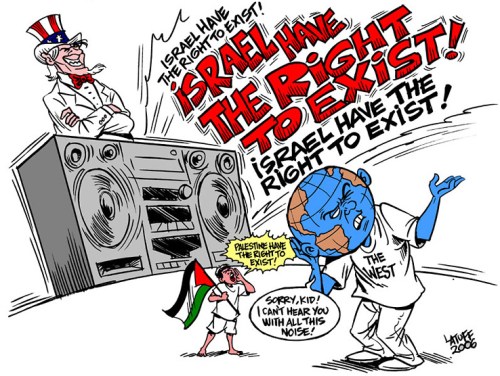
Christians’ attitude toward and support or non-support of Israel is in general determined by their understanding of Israel’s role in God’s redemptive work and in particular their interpretation of God’s word to Abraham in Genesis 12:1-3 (NIV):
1 The LORD had said to Abram, “Go from your country, your people and your father’s household to the land I will show you.
2 “I will make you into a great nation,
and I will bless you;
I will make your name great,
and you will be a blessing.
3 I will bless those who bless you,
and whoever curses you I will curse;
and all peoples on earth
will be blessed through you.”
Since in the New Testament a new Israel, composed of both Jewish and Gentile believers in Jesus, has been raised and formed (and replaced ethnic Israel as “the people of God”?) by the same LORD, does the promise of blessing or threat of curse still stand? Or should we now apply the blessing or curse in Genesis 12:2-3 to peoples depending on how they treat the Church, the new people of God? That is, those that bless the Church the LORD will bless but those that curse the Church the LORD will curse.
Furthermore, what does the blessing or curse entail? And in a broader perspective of humanity’s salvation and the second coming of Christ, would it really matter whether or not peoples have a special or “deep” (to borrow Barack Obama’s word) relation to the nation of Israel? Or perhaps as Luke 18:8 suggests—“…when the Son of Man comes, will he find faith on the earth?” (NIV)—the Messiah will just be looking for faith in him, and such faith or lack of it will form the basis for granting the ultimate blessing or curse.
I am tempted to try to express my thoughts in the Visayan language of my Facebook friends. But for the sake of those who cannot understand it, I’d rather not. Also, at the outset, let me say that my intention for doing this is not to vilify anyone. In truth, I have great admiration for those that stand their ground on any issue, including this one. My purpose is to present an alternative, perhaps unpopular, view of the Davao City issue that has actually already been there way before the punching incident involving the mayor and the sheriff was shown in the media (with the latter at the receiving end). And if this will help promote a friendly discussion, let me inform anyone reading this that Merwin and Doc Jon are my FB friends who became part of my life when I was assigned in Davao City as a junior intern from a Bible college I attended in southern Philippines. (And now we’re together again! Sort of.) In fact, Nong Merwin and his wife, Nang Flor, had been so nice and hospitable to me during my stay in Davao City that I often found myself at their kitchen table, eating! Daghang salamat! (Thank you very much!). It is my hope that this conversation will help all of us become more mature and enlightened in our thinking. My suggestion is that we all try to understand where each one is coming from, fairly weigh the arguments presented, and show mutual respect even if in the end we agree to disagree.
I was born and spent the first forty years of my life in the Philippines so I understand the Filipino people’s strong desire for a societal change that leads to a better life, especially to those that struggle daily to survive. And I understand why many of us have become impatient with the government officials who are as quick as a fox in pocketing public funds but as slow as snail in responding to the needs of their constituents. So when the likes of the Dutertes come into power, they are a breath of fresh air to many. And because the Dutertes have shown a strong political leadership that has effectively delivered the peace and order and the ensuing prosperity that other problematic cities can only dream about, Davaoeños wholeheartedly support them. So I think I know where my friends who disagree with me are coming from and I think I do understand them.
However, as we ponder upon how societies might go about the process of societal change, we have to remember that we are a civilized people who are part of a civilized world. And we are also Christians! So we have to ask ourselves the question: What is the civilized and Christian way of doing things that would effect change and accomplish the same goals that we so desire for our city, province or country? Some think that the use of force, killing, bloody revolution, and anything we ordinarily consider to be morally wrong are justifiable when used to accomplish good ends. They embrace an ethical theory (teleological ethics) that holds that the ends or consequences of an act determine whether it is good or evil. Communists, for example, espouse such teleological ethics. But the fact that Communism is falling tells us that the civilized world is not buying the idea. But in Davao City, this particular consequential ethics is used and supported perhaps by most Davaoeños, and I think that’s really sad because the steps they have taken lead backward. Perhaps the Duterte supporters indeed feel a sense of peace as criminals and other “undesirables” have been rooted out of their city (through “salvage”? In the Philippines the word has taken on a new meaning: “to summarily kill or eliminate”). But to those that cannot “put up” or “shut up,” do you think Davao City is a safe place for them? I doubt. A quick fix that utilizes an “iron hand” or, perhaps better, “iron fist” (and uses vigilantes who have been given by the authorities the blessing to “do what they have to do”?) is obviously not the right answer to the problems in Davao City or any other place in the world for that matter.
It is quite appalling that human rights violations in other countries such as Great Britain are also used to justify the Iron Lady’s act of violence. I don’t understand the kind of reasoning that seems to go this way: if human rights violations are also committed in other countries why criticize our mayor? There is absolutely no logic there.
As Christians, Scriptures along with reason should be used as tools as they can guide us in critiquing or promoting ideologies or in doing anything in pursuit of a better world. We need to realize, however, that Scriptures can be taken out of context, misunderstood and misused, especially when we are too eager to support an idea that for some reason we want to keep, perhaps because it’s “good for us.” On the other hand, when Scriptures are read within their context and understood properly, they are very useful for out of them we can draw principles that can guide us in our effort to “seek first God’s kingdom and his righteousness” which assures those of us that actually do of the Lord’s promise: “all these things (God’s provision and other blessings) will be given to you as well” (Matthew 6:33; all Scripture quotations here are from the New International Version).
To determine whether an act is good or evil, I think we need to reflect on the life of Jesus: his words and deeds. Let us remember that Jesus was also born in an oppressive world controlled by the Romans and those that connived with them. And we know that he had the concerns of the poor and the needy at heart because he responded to them! But how? He performed miracles on behalf of them and gave them hope through the message of “the kingdom of God” that he preached. Did he denounce evil? Oh yes! In fact the authorities got so mad at him that in the end they crucified him! Did he lead an armed rebellion? Clearly no! But did he resort to violence (as in assault) in obeying the will of the Father? Well, let’s take a look at Jesus who appeared to have lost his cool in the temple as it is the story alluded to in support of what I’d call “the Duterte way.”
The narratives in Matthew 21:12-13, Mark 11:15-16 and John 2:14-16 all show Jesus entering the temple, driving out those that buy and sell, and overturning the tables of the money changers and the benches of those selling doves. John adds that Jesus “made a whip out of cords, and drove all from the temple courts, both sheep and cattle” and said to those who sold doves, “Get these out of here! Stop turning my Father’s house into a market!” Clearly Jesus made a whip of chords and although he used them to drive out the merchants from the temple courts he does not appear to have used them as a weapon that would inflict physical damage and pain to them. Besides, the lesson of the story is not for any of us to follow Jesus’ act in a literal way but that like Jesus we are to be passionate about the things of God and how we are to maintain a sense of awe in response to them. So if we apply it to the Davao City issue, where is the sense of awe to the things of God when God’s kingdom and righteousness are blatantly disregarded in the human pursuit of gain such as the peace and prosperity of the city? Isn’t this a case of seeking first “all these things” rather than “the kingdom of God and his righteousness”? So if there is peace in Davao City, is it the kind of peace that comes from God? And if Davao City is prosperous, is it a blessing from God? Obviously not!
Reaching a societal goal of peace and prosperity the biblical “narrow way” (the right way) may take a long time, but the quick fix of the Iron Lady of Davao City and her cohorts is just plain wrong. It is the “broad way” (the wrong way) that will lead to the city becoming a modern Babel. So if things will remain the same in Davao City, if the Duterte way will prevail, why in the world stay there?






 PENnED