• Read: Philippians 4:4-9

    8 Finally, brothers and sisters, whatever is true, whatever is noble, whatever is right, whatever is pure, whatever is lovely, whatever is admirable—if anything is excellent or praiseworthy—think about such things.

    If you’re wondering about what to think about, the verse above should make you wonder no more. Although it might be rare, sometimes we find ourselves having plenty of time. When we do, it can be a time to feed our minds with the right stuff. I think it’s important. Why? Because what we think helps mold who we become. It’s like eating. If you feed yourself with junk foods then your body will become fat and unhealthy.

    So why don’t you pause for a few moments and think about anything true, noble, right, pure, lovely, and admirable, or anything excellent or praiseworthy. So go ahead, do it … it’s good for you, for your personal growth.

    What you think is what you become. 

  • _

    John 1:6-8, 19-28 (NIV)

    There was a man…

    This beginning statement of the narrative tells us that whoever this man was, he’s no longer here. He’s gone. He’s dead.

    The same statement can actually be the beginning of the story of any person who once walked upon this earth. In fact there is a song by Carpenters that begins with the same line, “There was a man.”

    But the song continues not with a positive description of the man, like what we have in this narrative in John, but with a negative one:

    There was a man

    A lonely man

    Who lost his love

    Through indifference

    It’s a sad story of a man whose love “went unshared.” The song goes on and it tells us more about this man:

    While life goes on around him everywhere
    He’s playing solitaire

    When I’m gone, that’s not the kind of story I want told about me. What I want is a story similar to that of John the Baptist. Although he lived a short life–or “shortened” life because Herod had him beheaded–John lived a full and meaningful life.

    How did it happen?

    Sent from God

    First, John had a strong sense of calling. He knew he was called by God for a specific purpose. He knew that his purpose was to prepare the way for the Messiah. So John lived his life fulfilling his purpose with single-minded devotion.

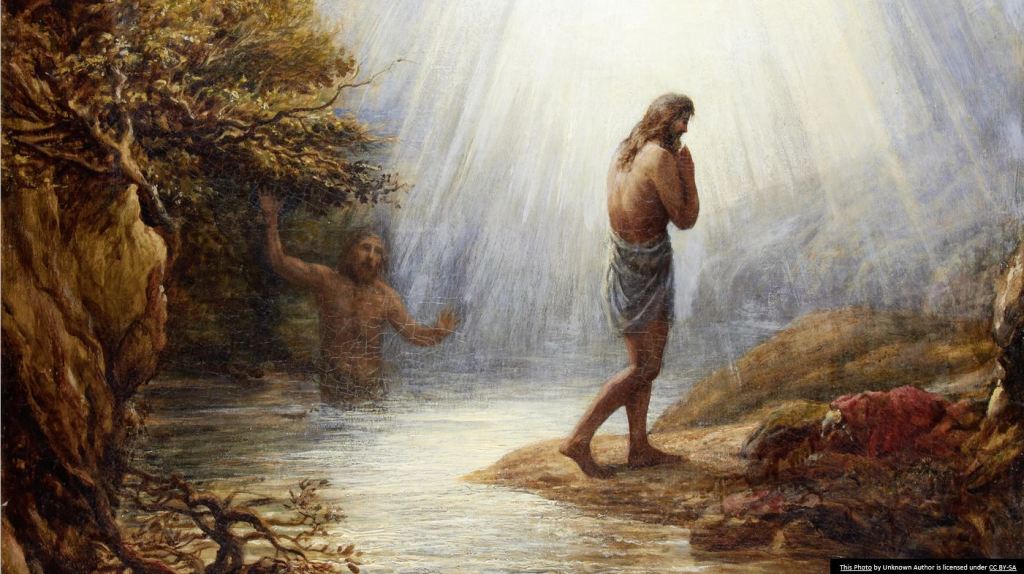
    John preached repentance and assisted people in sealing their commitment to the Lord through baptism. He was quite a sight in the river Jordan that some thought that he was the Messiah they were waiting for. But John would not give in to the temptation to pretend to be another man.

    In life, there may be that temptation to portray ourselves not really as who we are, perhaps because we want people to see a better picture of ourselves. On Facebook, some people hide their face by not posting a profile picture. But there are some who post a picture of themselves taken 30 years ago! Why? Maybe because they want people to see them looking better than how they look now.

    How did John the Baptist overcome the temptation to show himself as someone greater than he was?

    Who are you?

    John knew who he was and was happy with his identity. He knew that he was not the light but that he was only a witness to the light. So John did not pretend to be the light. When asked if he was the Messiah, he said “no.” Elijah? Another “no.” The Prophet? Still “no”! He knew he was not the Messiah, nor Elijah, nor the Prophet. And he did not pretend to be any of them.

    John knew who he was and had a clear picture of his identity: “I am the voice of one calling in the wilderness, ‘Make straight the way for the Lord.’”

    John may have lived a short life but it was a purposeful and meaningful life. Why? Because he lived life according to his calling and identity. Do you?

  • Read: Ecclesiastes 2:1-11

    11 Yet when I surveyed all that my hands had done and what I had toiled to achieve, everything was meaningless, a chasing after the wind; nothing was gained under the sun.

    Everything that this guy (“son of David, king in Jerusalem,” 1:1) said in this passage–indeed in all of Ecclesiastes–should be read in view of his conclusion in chapter 12:  13 Now all has been heard; here is the conclusion of the matter: Fear God and keep his commandments, for this is the duty of all mankind     

    When we do, then we get the idea that everything we do should be done in awe of a good God whose good commandments we should keep, and a God who “will bring every deed into judgment” (12:14). And when we do, then everything becomes not meaningless. Indeed, as Christian believers, everything we do becomes meaningful when done to the glory of God. “So,” as the Apostle Paul told believers, “whether you eat or drink or whatever you do, do it all for the glory of God” (1 Corinthians 10:31).

    Life is meaningful when lived according to its purpose.

  • Read: Matthew 1:18-25

    22 All this took place to fulfill what the Lord had said through the prophet: 23 “The virgin will conceive and give birth to a son, and they will call him Immanuel” (which means “God with us”). 

    “If God said it, it’s gonna happen.” I heard that, or something like that, many times. It gives you the impression that people just yield to the will of God. But we know that it’s not always the case. Part of being human is the power to make our own choice. Thus, we can say either yes or no to God.

    In this Scripture narrative, Joseph said yes. But what if he said no? Could it have prevented the fulfillment of the Lord’s word through the prophet? I don’t think so. Being God, the Lord is able to do what he said he would do regardless of a person’s decision. Nobody, and nothing, can thwart the plan of God.

    But because Joseph said yes, he was blessed! He became a major participant in God’s plan of salvation. And all of Christendom remembers him, especially during this Advent season.

    If we want to be blessed to the Lord we must say yes.

  • Read: 1 Kings 3:1-9

    7 “Now, LORD my God, you have made your servant king in place of my father David. But I am only a little child and do not know how to carry out my duties. 8 Your servant is here among the people you have chosen, a great people, too numerous to count or number. 9 So give your servant a discerning heart to govern your people and to distinguish between right and wrong. For who is able to govern this great people of yours?”

    Solomon is well-known as Israel’s wisest king. But he is known for it not because of a latent talent. God gave it to him. Solomon himself confessed his lack of discernment and wisdom by comparing himself to “a little child” that did “not know how to carry out (his) duties.”  His humility paid off because God granted him his request for a “discerning heart” and ability “to distinguish between right and wrong.” Regardless of our calling in life, we all need to get on the path of wisdom for obvious reasons. And Solomon has shown us how to start on that path.

    Acknowledging our ignorance is the first step we take on the path of wisdom.

  • Read: 1 Corthians 13

    13 And now these three remain: faith, hope and love. But the greatest of these is love.

    The greatest is love. We know that. Well, sort of.

    If we really know and are convinced that love is the greatest of all God’s gifts, then our life should be profoundly touched, obviously characterized, and greatly motivated by it. Yet it is not in loving that many of us choose to excel. Sometimes we live life as if we don’t need to give or receive love.

    We ought to be grateful that God has given us the lesser spiritual gifts and talents. Indeed, we are to develop and use them. But these gifts and talents are to be used not selfishly, to get ahead, but lovingly, to put others first, and to make the world a better place.

    What an old song expresses is still true:

    What the world needs now,
    Is love, sweet love,
    It’s the only thing that there’s just too little of.
    What the world needs now,
    Is love, sweet love,
    No, not just for some but for everyone.*

    The greatest gift we can give doesn’t cost a dime. This Advent Season and Christmas, give love.

    _____________________________________________________________________________________________________________________________________

    *What the World Needs Now Is Love” is a 1965 popular song with lyrics by Hal David and music composed by Burt Bacharach. First recorded and made popular by Jackie DeShannon, it was released on April 15, 1965, on the Imperial label after a release on sister label Liberty records the previous month was canceled. The song reached number 7 on the US charts in May of that year. Read more >> http://en.wikipedia.org/wiki/What_the_World_Needs_Now_Is_Love

  • Read: 1 Corinthians 11:23-34

    Peter Paul Rubens' Last Supper (1632)

    The Lord Jesus, on the night he was betrayed, took bread, 24 and when he had given thanks, he broke it and said, “This is my body, which is for you; do this in remembrance of me.” 25 In the same way, after supper he took the cup, saying, “This cup is the new covenant in my blood; do this, whenever you drink it, in remembrance of me.” 26 For whenever you eat this bread and drink this cup, you proclaim the Lord’s death until he comes.

    My wife, two boys, and I were in another church last Sunday to join them in their anniversary celebration. In the car, on our way home, my wife, said this about the pastor who was invited to preach and officiate the communion: “I could forgive his over-an-hour sermon that went everywhere but the way he did the communion….” She felt that the way it was done was irreverent–the pastor obviously took it lightly. There was neither re-enactment nor recitation of the words of the Lord’s Supper and he cracked not-so-funny jokes that led people away from reflecting on the sacrificial death of our Lord.

    It makes me sad when Christian leaders do not lead people to experience a meaningful celebration of the Lord’s Supper. Although I understand that different traditions have different ways of doing it, but the purpose of serving the Lord’s Supper seems clear in our Scripture text today: to experience the presence of the Lord in a special way by reflecting on what he’s done for us on the cross of Calvary.

    If our understanding of the Lord’s Supper is clear, then our proclamation of the Lord’s death in it can be clear as well.

  • Read: Psalm 37:1-11

    1 Do not fret because of those who are evil or be envious of those who do wrong; 2 for like the grass they will soon wither, like green plants they will soon die away.

    Sometimes we wonder why “those who are evil” prosper instead of  those who are good. We can probably explain it in terms of latent talent and drive–those who have the talent to enrich themselves and whose whole purpose in life is to get what money can buy tend to become rich in material possessions. On the other hand, those who are good, especially Christian believers, perhaps put more value on the spiritual or other non-tangible things and that’s why they do not get rich or as materially prosperous as some bad guys.

    I don’t think unbelievers and evil people should be given monopoly for making money. I think it’s okay for believers to make a lot of money. As long as money do not get our affection, as “the love of money is a root of all kinds of evil” (1 Timothy 6:10), there is no problem in that. So perhaps the reason why those that do evil are getting rich and we are not is perhaps because we do not work as hard.

    But it seems that the issue  here is about those that make a lot of money using evil ways. Well, the advise is to not get envious of them. Why?  Because “like the grass they will soon wither, like green plants they will soon die away.” In v. 10 it reads:  “A little while, and the wicked will be no more; though you look for them, they will not be found.” This gives some the idea that unbelievers and evil ones will be annihilated, that is, they will cease to exist. When they die, that’s the end of them.

    That might get us interested, but we should really be more interested in what God has in store for us: “But the meek will inherit the land and enjoy peace and prosperity” (v. 11). For us, believers in Christ, “a new heaven and a new earth” (2 Peter 3:13) is our inheritance, our “land of promise.” God’s people who live “holy and godly lives” (2 Peter 3:11) will live in this perfect place forever!

    Don’t get envious, heaven is yours!

  • Read: 1 John 4:7-21

    19 We love because he first loved us. 20 Whoever claims to love God yet hates a brother or sister is a liar. For whoever does not love their brother and sister, whom they have seen, cannot love God, whom they have not seen. 21 And he has given us this command: Anyone who loves God must also love their brother and sister.

    If asked  if we love God, most of us, if not all, would quickly say, “I do.” But I doubt if we can say the same when asked about a sister or brother in Christ or anyone, that we don’t like. But the fact that we are commanded to love, including those that are a pain to us, implies that God will enable us to do it. What can also help us do it is thinking about how God loves us despite what we are.

    Loving is not always easy, but if we love God, we must  keep doing it.


  • Read: Psalm 145:8-21

    18 The LORD is near to all who call on him,  to all who call on him in truth. 

    “The LORD is near to all who call on him….” But  the verse doesn’t stop there. It goes on to add a qualifier: “to all who call on him in truth.”

    The question we might ask is, What does it mean? Does it mean that the one that calls does so sincerely or seriously–not just pretending but truly doing it? Or, does it mean that the one that calls lives and operates his life within the context of truth? Based on the verses that follow (vs. 19-20) and speak of the one who fears and loves the Lord–as opposed to the wicked–I’d prefer the latter option.

    The Lord is near to those who call on him and live in and by the truth.

  • Read: 1 Peter 1:3-5

    3 Praise be to the God and Father of our Lord Jesus Christ! In his great mercy he has given us new birth into a living hope through the resurrection of Jesus Christ from the dead, 4 and into an inheritance that can never perish, spoil or fade._

    In the Bible study I led last night we began by singing praise songs. Then I gave everyone the opportunity to express their praise to God. There was one thing that everyone agreed was the greatest thing that God has given us. And that one thing is the exact same thing that 1 Peter 1:3-5 praises God for: eternal life._

    Some people think of eternal life as the life one lives without end after death. But in this Scripture text we find that eternal life begins at new birth or the moment you receive or believe in Jesus as Savior (John 1:12; or are “born again” John 3: 1-21). Then you enjoy the “abundant life” (John 10:10) God has given you and, with “living hope,” look forward to the “inheritance that can never perish, spoil or fade” which is “kept in heaven for you.”

    The gift of eternal life is given to us
    not because we are great
    but because God’s mercy is great.

  • Read: Romans 5:1-11

    8 But God demonstrates his own love for us in this: While we were still sinners, Christ died for us.

    This is the good news that many religious people either do not get or simply  ignore. Why do I say that? Well, most professing Christians I met think that by doing good they can make themselves acceptable to God and make it to heaven. But how can sinners make themselves acceptable to God? They cannot!But God does what we cannot do–save us from sin through Christ’s death. And all we need to do is to embrace God’s love and  receive the gift of salvation by believing in Christ as Savior. And since Christ is also Lord, we are to follow him with a single-minded devotion. Then we become saints.

    Sinners who embrace God’s love become saints.

  • Dear Kuya Ed,

    Matagal ko na kayong binabantayan sa FB. Meron din akong gustong sabihin sa inyo na hindi ko dapat sabihin. Kaya lang hindi ko na matiis…type ko kayo! Tsup…tsup…tsup!

    Secret Admirer

    ……………………….

    Dear Secret Admirer,

    Salamat naman at may naduling pa sa akin. Kaya lang may misis na ako. Ang pangalan niya ay Ruth, at may tatlong anak na kami. Kaya’t pasensya ka na… my heart is already taken. But don’t lose hope… may makita ka pang mas bagay sa iyo. Keep looking up so when you look around, you’ll find the right one!

    Blessings!

    Kuya Ed 

    _______________________________________________________________________________________________

    ?????

    Have troubles or problems? Questions?

    Maybe Kuya Ed can help. May tanong ka ba? Malay mo, baka may sagot si Kuya Ed. So, sige na…sulat na…

    Dear Kuya Ed…

  • Read: Exodus 20:1-17

     1 And God spoke all these words:  2 “I am the LORD your God, who brought you out of Egypt, out of the land of slavery.

    Many professing Christians think that if they observe the Ten Commandments then, when they die,  at the “Pearly Gates” St. Peter will let them enter heaven. To them obeying the commandments is the way to be saved.

    The first two verses that introduces the 10 Ten Commandments, however, show that God has already saved the people of Israel from slavery before they heard the Ten Commandments. Sure, they have not yet reached the promised land but we know that even getting there does not depend on them. If it does, then based on how they obey God, none of them could make it!

    Similarly, God has saved us and through faith in Christ we receive salvation as a gift. When we who have already been saved obey the commandments, we do it, obviously not to be saved, but because it’s what saved people have been empowered by God to do! Ephesians 2:8-10 reads, “For it is by grace you have been saved, through faith—and this is not from yourselves, it is the gift of God— not by works, so that no one can boast. For we are God’s handiwork, created in Christ Jesus to do good works, which God prepared in advance for us to do.”

    We’ve been saved not because we obey, we obey because we’ve been saved. 

  • Read: Philippians 2:12-18

    14 Do everything without grumbling or arguing, 15 so that you may become blameless and pure, “children of God without fault in a warped and crooked generation.” Then you will shine among them like stars in the sky 16 as you hold firmly to the word of life.

    As part of the community of believers, we are “the light of the world,” says Jesus. Shining “like stars in the sky” among “a warped and crooked generation,” however, is not automatic. For us, children of God, to shine, we are to “become blameless and pure.” And part of how to become one is doing “everything without grumbling or arguing.” The question then becomes, How do we avoid such things?

    The answer is found in vs. 12-13: “continue to work out your salvation with fear and trembling, for it is God who works in you to will and to act in order to fulfill his good purpose.” Don’t get it wrong, salvation is not by human works but by God’s grace (Ephesians 2:8-9). But those that have received salvation as the gift of God are now “God’s handiwork, created in Christ Jesus to do good works, which God prepared in advance for us to do.” In other words, as God’s living masterpieces, we ought not to stagnate, but we are to be spiritually renewed everyday. When we grow spiritually, then we bear spiritual fruit, and doing good works becomes second nature to us.

    We’ve been saved not by our good works, but we’ve been saved to do good works. 

    _______________________________________________________________________________________________

    Fun Facts About Stars

    • There are nearly 1 x 10 ^22 stars in the universe.
    • Some of the stars in the sky are so far that the light from them takes million of years to reach us.
    • Proxima Centauri is the closest star to our solar system and is nearly 4 light years away.
    • Inside the nebula, when gases and dust condense, a new object is formed which is known as protostar.
    • Depending upon how hot the white dwarf star is, its color varies from blue, white, yellow, or red.
    • Supernova explosions are capable of destroying an entire star.
    • Pulsar, a neutron star which was discovered in 1967 emits radio waves.
    • Polaris, the north star, is the only star in the sky that doesn’t appear to move from night to night.