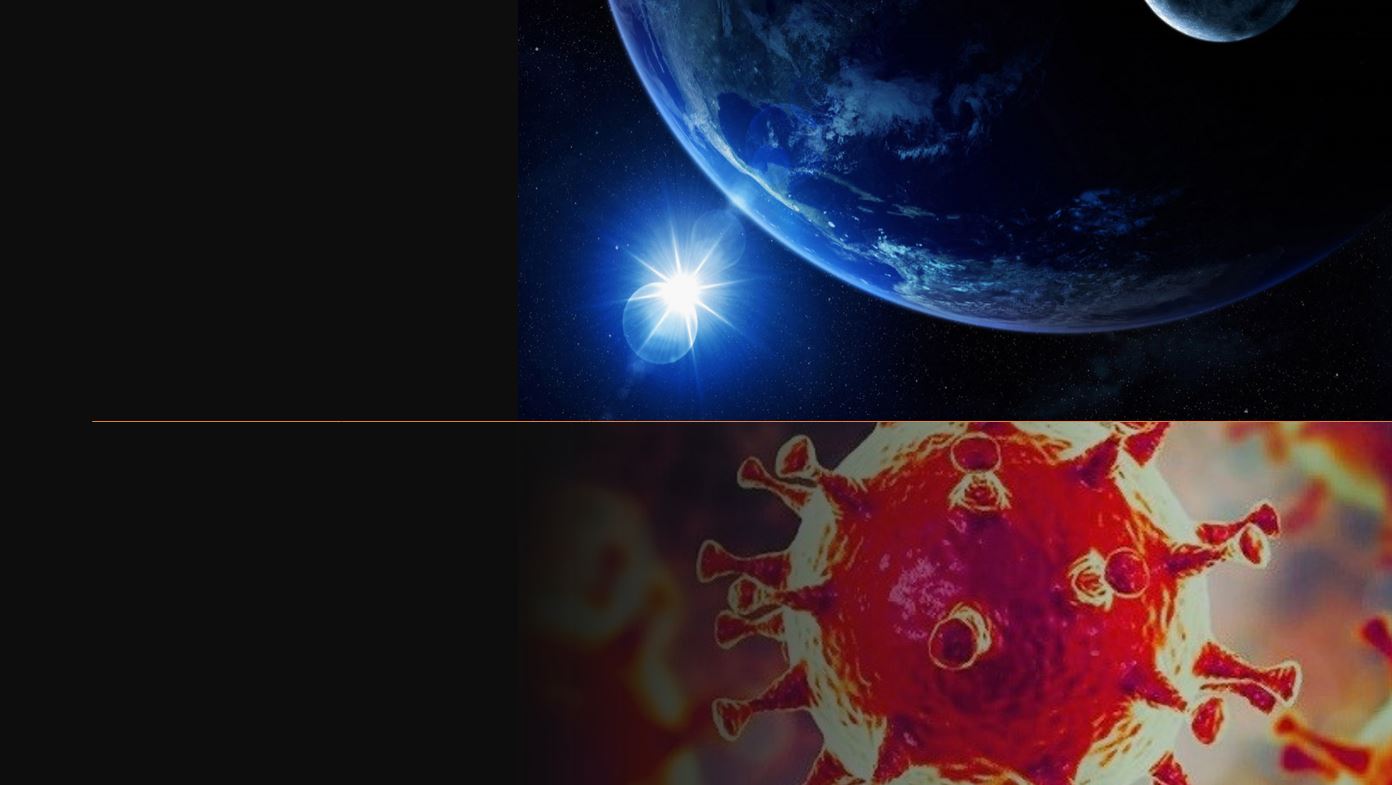
As of this writing, Italy has recorded the highest daily death toll anywhere in the world and the US leads the world in confirmed coronavirus cases.
While the whole world scrambles to fight coronavirus and individuals from different places and backgrounds offer very generous help, some Christians look at the pandemic as simply God’s judgment of sin and unbelief and that the solution is for people “to repent and receive Christ as personal Savior and Lord”.
I am for repenting of sins, anytime, especially if those sins have been clearly committed—not just assumed or imagined. I also believe that everyone needs God’s salvation, a gift that can be had through faith in Christ (Ephesians 2:8-9). However, to say that God sent the current coronavirus as a form of punishment for sins is not only too simplistic but also presumptuous and lacks biblical and theological grounding.
To come up with a sound theological analysis of the situation, I suggest that we ask the following probing questions (and answer them, as best we could, using Scriptures as our guide): Where did bad viruses come from? Has God sent the coronavirus to punish the sinful unbelieving world? And what picture of God should we show the world, especially in such a time as this?
Where did bad viruses come from?
For our purpose, we’re not evaluating any conspiracy theory or whether the virus is man-made. Also, I think that we need to go beyond Wuhan and the new coronavirus itself to get to the root of the problem.
Not all viruses are bad. We should be thankful for that. Good viruses (and bacteria too) help to protect us. It’s the bad viruses that pose a problem to us—they can wreak havoc to the human body or even kill us.

The enormous health and economic problems that the current coronavirus pandemic has caused may have led us (as it has led me) to ask how these “microscopic devils” came into being. Did God create these “evil viruses”?
When confronted with such or similar question, we may recall a statement we heard in Sunday school, catechism class, or a sermon. It goes something like this: God created everything. Because of such a general doctrinal statement, I will not be surprised if some would say, Yes, God created the bad viruses.
Such an answer, however, raises another question: If God is good (and I believe God is) how can God create such a bad thing? How can a good God create something that could render humans sick or, worse, dead?
Such a question cannot be answered in a simplistic way. That’s why I think every believer should develop the skill to think theologically. And that requires a kind of Christian education that goes beyond catechism, Sunday school, and sermon-listening.
Real-life challenges, such as the one we are facing amidst this coronavirus pandemic, can make us think more deeply or theologically. And that is a good thing—it can make us go deeper in our faith as we search for answers.
The Sunday school teacher, catechist, preacher, or anybody who said God created everything was correct. That is, if we put it in the context of creation, “in the beginning” (Genesis 1), in which “everything that (God) had made” was “very good” (v. 31).
So where in the world did bad viruses come from? Who or what made them? Some say that they come from Satan. In christianforums.com, for example, someone wrote, “I think viruses are the work of satan, (sic) because all they bring is death and destruction.”
That answer, however, puts too much credit to the Devil who does not have creative power. Nowhere in Scripture can we read that Satan has been given the ability to create. The Devil can tempt and cause destruction primarily through human agents. But that seems to be about it. The Devil is not God’s counterpart. God is the Creator; the Devil is not. I searched the Scriptures and didn’t find a single verse that shows Satan created anything. Let me know if you’ve found one.
So, if Satan is not directly responsible, who or what is? Humanity, as represented by Adam and Eve, might be to blame. Because of their disobedience, creation was affected: the earth (or soil) was cursed (Genesis 3:17-19). Still, humans are not directly responsible for the existence of bad things that can cause us to get sick and perhaps even die. Humans did not create those bad viruses. They came into being or evolved in cursed earth.
Sinful human action may have led to the existence of bad viruses, but humans did not create them. They did not have the power to do so. Although God “cursed the earth”, we should not regard such action as divine creation. God did not add anything to his creation. Creation degenerated as a result of human sin. And it is in such an environment (which has been called “the fallen world) that bad viruses raised their, if I may say, ugly crowned heads.
So, based on Genesis, it looks like the cursed earth became an environment where bad things, such as viruses, could now exist and evolve in a way that they can become dangerous to us. It appears then that viruses were not created. They simply showed up or evolved in cursed earth, perhaps from good viruses. (If that’s the case, then that’s of kind of like Satan who was at first called Lucifer [Isaiah 14:12], which means “bearer of light,” but who “fell” and became Satan, our “adversary the devil” [1 Peter 5:8], and the leader of “the rulers of the darkness of this world” [Ephesians 6:12, KJV]).*
Has God sent the coronavirus to punish a sinful, unbelieving world?
Except for those cases in Scripture in which plagues and diseases were clearly sent by the Lord (Deuteronomy 28:58-61), such as the ones God sent to Egypt (Exodus 7-11), a pandemic should not be ordinarily viewed as God-sent or as God’s punishment for sins.
The idea of an angry God who is bent at decimating humans because of their sins and unbelief (which some misguided souls often float in a time of crisis such as we have now) runs contrary to the dominant and clear picture of a loving and gracious God in Scriptures. Reading or hearing Jesus’ story about the prodigal son’s father (Luke 15:11-32), for example, should be enough to erase the picture of an angry God in one’s mind.
The idea of an angry God also runs counter to what has been clearly revealed in Scripture: “For God so loved the world, that he gave his only begotten Son, that whosoever believeth in him should not perish, but have everlasting life. For God sent not his Son into the world to condemn the world; but that the world through him might be saved…” (John 3:16-8a, KJV).
I know that that Scripture passage does not end there. It is followed by verses 18b-19: “He that believeth on him is not condemned: but he that believeth not is condemned already, because he hath not believed in the name of the only begotten Son of God. And this is the condemnation, that light is come into the world, and men loved darkness rather than light, because their deeds were evil” (KJV).
Such judgment, however, is clearly not a national or global judgment; it is individual (“he that believeth not is condemned already”). As such, it cannot be used to support the idea that God could be punishing the “sinful unbelieving world,” particularly not the idea that God is now punishing the world using COVID-19.

If you say a plague, such as the current coronavirus pandemic, is an exception—that God sent it as a form of punishment—then you must show that God has clearly said it is. If you claim that the virus is sent by God as a form of punishment for sin, then you must be able to justify such “revelation” that goes against the theme of redemption that runs through Scriptures or the actions of a loving God who clearly works not for the world’s destruction but its redemption and restoration: “For God was pleased to have all his fullness dwell in him, and through him to reconcile to himself all things, whether things on earth or things in heaven, by making peace through his blood, shed on the cross” (Colossians 1:19-20, NIV).
It is extremely important that we must be careful in claiming to be speaking on God’s behalf. If we say things carelessly, we can be guilty of false prophesy which God has gravely warned us against: “But a prophet who presumes to speak in my name anything I have not commanded, or a prophet who speaks in the name of other gods, is to be put to death” (Deuteronomy 18:20, NIV).
What picture of God should we show the world?
Knowing that God is best characterized by love, not wrath, we must be extra-careful in the way we paint God to the world. When self-righteousness tempts us to show a scary picture of God, for one reason or another, we must pause and think about whether such a picture is an accurate one.
We sometimes get angry, but I doubt if that’s the picture we show the world of ourselves. You don’t have to look at your profile picture or a friend’s on Facebook to know that. Yes, God sometimes gets angry, but anger does not characterize God. Love does. God is love (1 john 4:8).
God’s love can be seen not only in Scripture but also in nature. Specifically, God designed the human body so that it can fight against diseases. Just as there are bad viruses, there are also good ones. “Some viruses can actually kill bacteria, while others can fight against more dangerous viruses. Like protective bacteria (probiotics), we have several protective viruses in our body” (https://www.sciencealert.com/not-all-viruses-are-bad-for-you-here-are-some-that-can-have-a-protective-effect).
And thank God, we were made with an immune system that can “prevent or limit infection” (https://www.sciencealert.com/not-all-viruses-are-bad-for-you-here-are-some-that-can-have-a-protective-effect). We should be thankful that our gracious God so designed the human body that, in case humans became disobedient and, as a result, live in a world that would challenge their very existence, it is prepared to protect itself from diseases.
So if God designed the human body so that it can develop into something that would not be totally helpless in case it finds itself in a harsh environment, such as the “fallen world”, how can we also say that God sent a killer virus that can decimate humans? To say that the Creator is working against his creation does not make sense. The idea that an angry God sent the coronavirus to destroy humans, does not make sense.
The immune system, however, does not guarantee protection for everyone or all the time—it can become weak or may not respond or function properly. And since matter is bound to decay, human bodies, that can survive diseases, ultimately die. But thanks be to God, in Christ we and all of creation will be redeemed (and, consequently, restored):
For the creation waits with eager longing for the revealing of the children of God; for the creation was subjected to futility, not of its own will but by the will of the one who subjected it, in hope that the creation itself will be set free from its bondage to decay and will obtain the freedom of the glory of the children of God. We know that the whole creation has been groaning in labor pains until now; and not only the creation, but we ourselves, who have the first fruits of the Spirit, groan inwardly while we wait for adoption, the redemption of our bodies (Romans 8:19-23, NRSV).
The clear picture of a loving and gracious God who loves the world so much and who offers redemption through faith in Christ is the picture we, Christians, should publish. Any picture that does not, might be a picture of a false god.
_____
*It is plausible to not regard “bad” viruses as inherently bad, just as we do not regard wild animals as inherently bad. When a man is killed by a tiger, we consider it a bad thing (and that’s why some might see the tiger as bad and kill it). However, the reason why people are killed by wild animals might be that they have intruded into the wild animals’ habitat. It appears that something similar can be said about killer viruses: they become a problem not because they “…magically jump out of the forest… It’s because we are getting….into the forest.”

Photo by Flickr on Pexels.com

 PENnED
Leave a comment