A Pastoral-Theological Reflection on Digital Self-Doubt
I clicked on a Facebook ad without thinking much of it.
It named something familiar: distraction, procrastination, the slow, wandering path of creative work. The ad promised clarity in three minutes — a quick test to “understand my mind.” And because I’m a writer, and because I’m human, I tapped “Learn more.”
The quiz was simple enough. A few questions about focus, motivation, and forgetfulness. But as I moved through it, I felt something shift. The questions weren’t neutral. They nudged me toward interpreting ordinary human experiences as symptoms. And at the end, the quiz delivered its predetermined conclusion: You have ADHD.
Conveniently followed by a counselor ready to help.
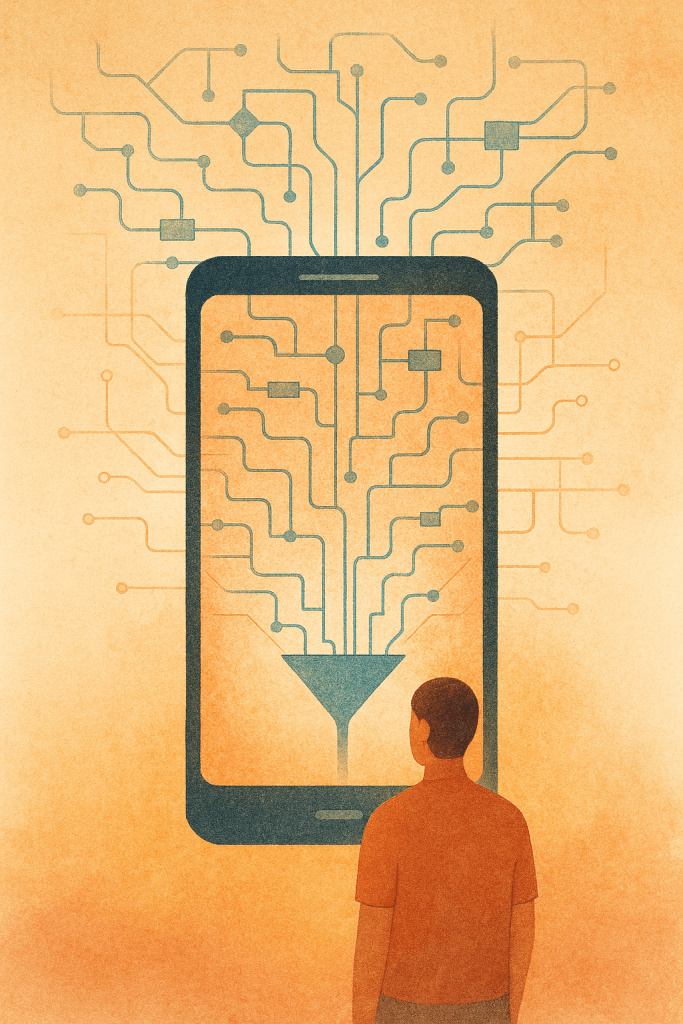
It wasn’t a diagnosis.
It was a funnel.
And that realization became the real point of discernment.
The Digital Moment That Makes You Doubt Yourself
There’s a particular kind of vulnerability that digital platforms know how to exploit. It’s the moment when you’re tired, reflective, or simply curious enough to wonder:
Is this normal?
Is something wrong with me?
The quiz didn’t just ask questions. It invited me to reinterpret my own humanity through the lens of pathology. It suggested that my creative rhythms — the circling, the pausing, the slow burn of writing — were signs of disorder rather than signs of craft.
That’s when I realized:
The quiz wasn’t diagnosing me.
It was shaping me.
The Oldest Temptation in a New Digital Form
Theologically, this moment echoes one of the oldest human vulnerabilities. In Genesis 3, the serpent doesn’t begin with rebellion. It begins with a question:
“Did God really say…?”
The goal is not information.
The goal is destabilization.
Digital self‑diagnosis tools often function the same way:
- “Do you really know yourself?”
- “Are you sure this isn’t a disorder?”
- “What if your normal struggles are actually pathology?”
The quiz becomes a mirror that distorts rather than reflects.
It whispers:
Maybe you’re not who you think you are.
When Marketing Masquerades as Care
Pastoral theology insists on a crucial distinction:
Care is relational.
Marketing is transactional.
A pastor, clinician, or spiritual director begins with you — your story, your history, your context, your dignity.
A digital funnel begins with your vulnerability — and moves you toward a product.
This is not to demonize technology.
It’s to name the difference between:
- discernment and diagnosis
- relationship and retention
- care and conversion metrics
When a quiz tells you who you are and then immediately offers a paid solution, it’s not practicing care. It’s practicing strategy.
The Human Reality: Not All Distraction Is Disorder
One of the quiet gifts of pastoral theology is its refusal to reduce the human person to symptoms.
Writers procrastinate.
Artists wander.
Pastors pause, reflect, and return.
Humans get tired, overwhelmed, or bored.
None of this is inherently pathological.
In fact, much of what we call “distraction” is actually:
- incubation
- creative gestation
- subconscious processing
- the mind circling a truth it isn’t ready to articulate
My writing practice — slow, deliberate, recursive — is not evidence of ADHD.
It’s evidence of craft.
The quiz didn’t reveal a diagnosis.
It revealed a marketing strategy.
The Theological Core: You Are Not a Problem to Be Solved
Christian anthropology begins with a declaration:
“It is good.”
Before sin, before struggle, before distraction, before diagnosis —
the human person is named as good.
Digital diagnostic culture reverses this order.
It begins with:
“You are probably broken. Let us tell you how.”
Pastoral theology insists on the opposite:
“You are beloved. Let us discern what is happening within that belovedness.”
This doesn’t dismiss real mental‑health conditions.
It simply refuses to let algorithms define the soul.
Discernment Over Diagnosis
A real ADHD assessment is relational, contextual, and careful.
It involves:
- a clinician
- a history
- a conversation
- a story
- a community
A three‑minute quiz cannot hold a human life.
But pastoral discernment can.
The question is not, Do I have ADHD?
The deeper question is:
What is this moment revealing about how I understand myself?
And even deeper:
Who gets to name me?
A quiz?
An ad?
A marketing funnel?
Or the God who calls you beloved?
A Pastoral Word for the Digital Age
We live in a time when algorithms try to tell us who we are before we’ve had a chance to remember whose we are.
Digital tools can help us.
But they can also shrink us.
They can illuminate.
But they can also distort.
And so the pastoral invitation is simple:
Be slow to let a screen define you.
Be slower still to let it diagnose you.
And be anchored in the truth that your identity is not a product of your
data, your habits, or your attention span — but of your belovedness.
Because at the end of the day, an algorithm can measure patterns, but it cannot hold a story.
It can track your clicks, but it cannot trace your calling.
It can predict your behavior, but it cannot perceive your soul.
Only relationship can do that.
Only community can do that.
Only God can do that.
So the next time a quiz tries to tell you who you are, pause.
Take a breath.
Remember that you are more than your browser history, more than your distractions, more than your productivity, more than your wandering mind.
You are a person in process.
A life unfolding.
A soul being shaped in ways no algorithm can quantify.
And perhaps the most pastoral thing we can say in this digital age is simply this:
You are not a problem to be solved.
You are a mystery to be tended.
And you are held — not by metrics, but by mercy.
 PENnED
Leave a comment