This has been quite a week. It began on Father’s Day, when I shared a homily on Colossians 2:20–23 with the small congregation at Haven Community Church. I spoke about a fundamental truth of the Christian life: having died with Christ, we are no longer bound to the pressures and demands of manufactured religion. As Paul says, we have died to the “principles of the world”—those systems that convince people that the Christian life is defined by rules, rituals, and performance.
But the gospel tells a different story. In Christ, we have been set free from a life ruled by do’s and don’ts and invited into a life rooted in our identity with him. Obedience is not the root of our faith; it is the fruit of belonging to Christ.
Some of the reflections I shared online caught the attention of people I call “Neojudaizers”—modern versions of the ancient Judaizers who insist that obedience to the commandments is the foundation of salvation rather than its outcome. I’m grateful that, unlike years ago, I now try to engage these conversations with patience and friendliness. After all, what good is winning an argument if you lose the person you’re arguing with?
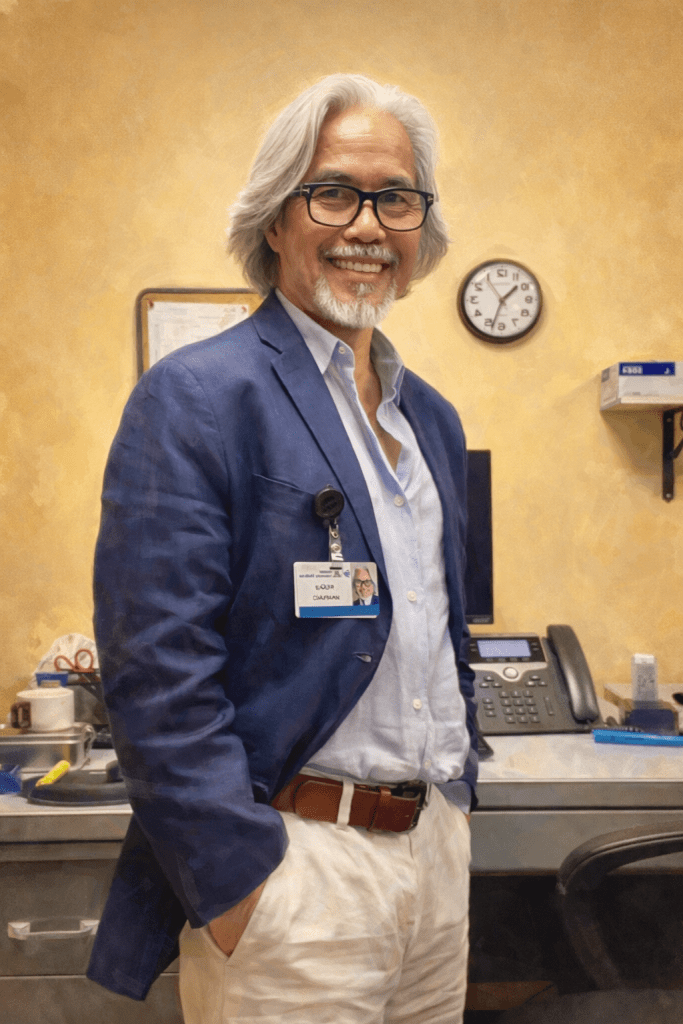
Being kind, however, doesn’t mean compromising convictions or staying silent to avoid conflict. Silence doesn’t help anyone. My work as a hospital chaplain has taught me to listen more carefully, especially to people from different Christian traditions. Listening well helps me understand what they’re actually saying—and respond in a way that meets them where they are.
Thinking about my patients—their crises, their mental and emotional burdens, their questions—makes me more mindful of how I speak and how I answer. And interestingly, the message I preached at Haven last Sunday has resurfaced several times in my conversations at the hospital. I’ve also leaned on other passages dear to me, like Romans 8:28 and Ephesians 2:8–9. The responses have been deeply encouraging.
Let me share a few encounters, with names changed for privacy.
Jose had been involved in a drug cartel. When I asked how I could help, he said he wanted to know more about God and Jesus. He told me he used to kill people—and that he enjoyed making them suffer. Now he has six months to live, maybe less. He believes he deserves hell.
Tom said he was trying to climb out of hardcore atheism. His health was failing, and he felt he needed to resolve his intellectual struggles before it was too late.
Jane was in the behavioral unit, depressed and suicidal. She had been raped at seventeen and later endured an abusive marriage and another abusive partner.
What these individuals share is the exhaustion of trying everything they could to fix themselves—and finding that nothing worked. As a chaplain, it would have been tragic to give them more rules, more demands, more spiritual tasks that had already failed them.
Instead, I pointed them to Christ. I told them that salvation is through faith in him alone. I did not tell Jose he could continue killing, or Tom that faith didn’t matter, or Jane that ending her life would be acceptable. What I said was this: because of faith in Christ, they have a new identity—and obedience grows out of that identity, not the other way around.
What a gift it is to help patients discover that life can begin anew through Christ, even if some of them may not have long to live that new life.
“A person finds joy in giving an apt reply—and how good is a timely word!”
Proverbs 15:23 (NIV)


Leave a comment