Big Boy was standing close to Booba’s faceI encouraged Sleepy softly……told him he could come in……that it was okay to say goodbye.…he had settled just below Booba’s feet…
It was between 3 and 4 this afternoon when I stepped into the bathroom and found Booba tucked into the narrow space between the toilet and the wall. His breath was thin, his body soft with the kind of surrender that comes near the end. At his age—well into his 90s in cat years—there was a quietness around him that felt like a threshold.
Big Boy was the first one I saw. He’s never been a small cat; even when he was young, he was larger than the others, which is how he earned his name. He was standing close to Booba’s face, almost like a sentinel keeping watch. When I entered, he didn’t dart away. Instead, he stepped aside—slowly, deliberately—as if giving me the space to be with Booba, as if saying, You can take this moment.
Then I noticed Sleepy approaching. Sleepy isn’t small either, though his name makes him sound gentle. He always looks a little drowsy, even when he’s fully awake. He paused at the doorway, unsure. I encouraged him softly, told him he could come in, that it was okay to say goodbye. But he hesitated—maybe because I was already in the room, maybe because the moment felt heavy.
I stepped out for a bit.
When I returned, the scene had shifted. Sleepy had crossed the threshold. He wasn’t pressed against Booba—there wasn’t room for that—but he had settled just below Booba’s feet, lying on the towel, part of his body touching his grandfather’s. It was a quiet, respectful nearness. Close enough to accompany. Gentle enough not to overwhelm. Big Boy watched from a little distance now, as if the family had rearranged itself into its final formation.
Standing there, I felt the echo of so many hospice rooms. The way grandchildren hover at the edge of the bed, gathering courage. The way they step forward when something inside them whispers, It’s time. The way presence—simple, steady, unforced—becomes its own kind of blessing.
And I wondered, not in a mystical way but in a lived, grounded one, whether the sacred presence I try to offer at the bedsides of dying patients is something animals sense too. Not the theology. Not the words. Just the steadiness. The quiet. The willingness to be near without asking anything of the one who is leaving.
Maybe presence is presence, no matter the species. Maybe the sacred doesn’t require language. Maybe it just asks for nearness.
This afternoon, in that hour between 3 and 4, in a bathroom corner between a toilet and a wall, a vigil formed. Big Boy stepped back. Sleepy stepped forward. And love did what it always does at the end—accompanied, softened, remained.
When the shelves thin and the lines stretch, it’s not just goods being hoarded — it’s the illusion of control.
My wife spoke with her sister in the Philippines tonight, and the tremor in her voice said everything before the words even arrived. Long lines at gas stations. Panic buying. Families afraid that tomorrow’s prices will rise beyond what they can manage. And as we listened, it became clear that this isn’t just a Manila story. It’s Jakarta. It’s Yangon. It’s parts of Europe. It’s the quiet, spreading fear that comes when global conflict ripples outward into the daily lives of people who already live close to the edge.
This is where the prophetic voice must speak plainly: the poor always pay first. When nations escalate conflict, when powerful governments make decisions insulated from consequence, the impact lands on the jeepney driver who needs fuel to work, the grandmother who cooks with gas, the street vendor who depends on deliveries that now cost more than they earn. These are not abstractions. They are the human cost of geopolitical ambition.
But the pastoral voice stands beside this truth, not to soften it, but to hold the people who feel it most. Behind every headline about “markets” are families trying to stretch a meal. Behind every chart showing rising oil prices is a worker wondering if tomorrow’s commute will cost more than their wages. Behind every policy decision are communities who had no say in the matter, yet bear the consequences in real time.
Tonight I find myself holding both voices at once. I lament how quickly fear spreads when systems are fragile by design. I grieve the way global tensions become local burdens, how the world’s poorest are asked again and again to absorb shocks they did not create. And yet I also feel the pastoral pull to steady the heart — to remind us that compassion is not powerless, that solidarity is not naïve, that clarity is not the enemy of hope.
We cannot control the decisions of governments, but we can refuse to let indifference become the air we breathe. We can insist that public discourse name the human cost of conflict before the political one. We can choose generosity over panic, steadiness over despair, and truth over abstraction. And in doing so, we bear witness to a deeper reality: even in a world trembling with uncertainty, we are not alone, and we are not without responsibility.
This moment calls for courage that is both moral and tender — the kind that sees clearly, speaks honestly, and still chooses to care.
Some days, the desert is a hush— a pale blue bowl of sky, air so tender it feels borrowed, and the sun, newly awake, warming the world as if by accident.
Other days, it stirs— clouds drifting in like slow‑moving thoughts, rain offering its brief, silver whisper, and the wind, when it rises, carrying the faint perfume of beginnings.
I live between these moods— the bright and the muted, the still and the trembling. Spring teaches in half‑sentences, in the way light lengthens quietly, in the way a single green blade can tilt the whole day toward hope.
The desert speaks in contrasts: silence that shimmers, heat that blesses, and the barest ground holding tight to a bloom it has not yet revealed.
So I rise, whether the sky is tender or wild, whether the breeze is shy or insistent, and I live— not around the desert, but through it, as it opens itself, one bright breath at a time.
Dementia affects far more than memory. While clinicians often describe it through cognitive markers—changes in recall, language, and executive function—the lived experience is deeply emotional, relational, and existential. As a hospice chaplain who regularly accompanies patients with dementia and their families, I see how the condition reshapes identity and connection in ways that clinical language alone cannot capture. Understanding this human dimension helps practitioners provide care that is both accurate and compassionate.
Emotional Awareness Often Outlasts Memory Even as cognitive abilities decline, many patients retain a strong emotional sensitivity. They may not remember names or recognize familiar places, but they can still perceive tone, presence, and intention. A calm voice or predictable routine often provides grounding when the world feels unstable. For clinicians, emotional consistency becomes a therapeutic tool that reduces distress and supports safety.
Identity Loss and the Fear of “Disappearing” Patients with dementia sometimes ask repetitive questions—“Where am I?” “Who are you?”—that reflect more than confusion. These questions often carry deeper concerns: Am I safe? Am I still myself? Recognizing this existential layer helps practitioners respond with reassurance rather than correction. This approach preserves dignity and reduces anxiety, especially during moments of disorientation.
Presence as a Primary Mode of Communication In advanced stages of dementia, verbal communication may fade, but relational presence remains powerful. Patients often respond to familiar sensory cues—music, scents, touch, or the rhythm of a loved one’s voice. In hospice settings, I’ve seen patients relax at the sound of a favorite hymn or the feel of a familiar blanket. These small interventions help maintain connection when language no longer can.
Families Experience Their Own Form of Grief Dementia creates a parallel emotional journey for families. They may grieve the gradual loss of personality, shared memories, and relational patterns. Feelings of guilt, frustration, and helplessness are common. Clinicians who acknowledge this emotional complexity help families feel supported rather than overwhelmed. Clear communication, validation, and practical guidance can ease the burden of anticipatory grief.
A Holistic Approach Improves Care Effective dementia care blends clinical accuracy with human‑centered communication. When practitioners explain the condition clearly, validate emotional experiences, offer strategies for connection, and support families through changing roles, they create a care environment that strengthens trust and improves quality of life. This integrated approach honors both the science of dementia and the humanity of the person living with it.
In the wake of Congress’ late but earnest attempt to restrain further military action, I find myself holding two truths at once: their effort is morally commendable, and yet it arrives only after irreversible harm has already been done. This lament rises from that tension—the sorrow of lives lost before the debate began, and the grief of watching our institutions move too slowly to protect those caught in the path of power.
O God, we see our lawmakers rise with resolve, offering measures shaped by conscience and care, yet their courage comes after the fire has already fallen.
Their effort is worthy of honor, for restraint is a righteous instinct, but their timing is a wound—a mercy offered after the graves have been dug.
They seek to stay the president’s hand, to slow the violence, to reclaim their duty, yet the missiles have already written their testimony in the dust of ruined streets and the silence of the dead.
How long, O Lord, will our institutions move at the pace of procedure while our weapons move at the speed of devastation?
Hear the cries of those who perished before the debate even began. Let their absence echo in every chamber where decisions are made too slowly to save them.
Bless the lawmakers who choose care, but teach us that care delayed becomes care diminished, and that moral clarity must stand at the door before the first strike, not after the second.
Break the pride that trusts in unchecked power. Break the illusion that one man’s urgency should outweigh the world’s fragile peace.
Restore to us a nation where life is not an afterthought, where restraint is not symbolic, where compassion is not a gesture made after the damage is irreversible.
Receive the fallen into Your mercy, and receive our lament as the confession of a people who acted too late.
Teach us to build a future where care is not merely commendable but consequential, and where the instinct of our leaders is to guard life before it is lost. Amen.
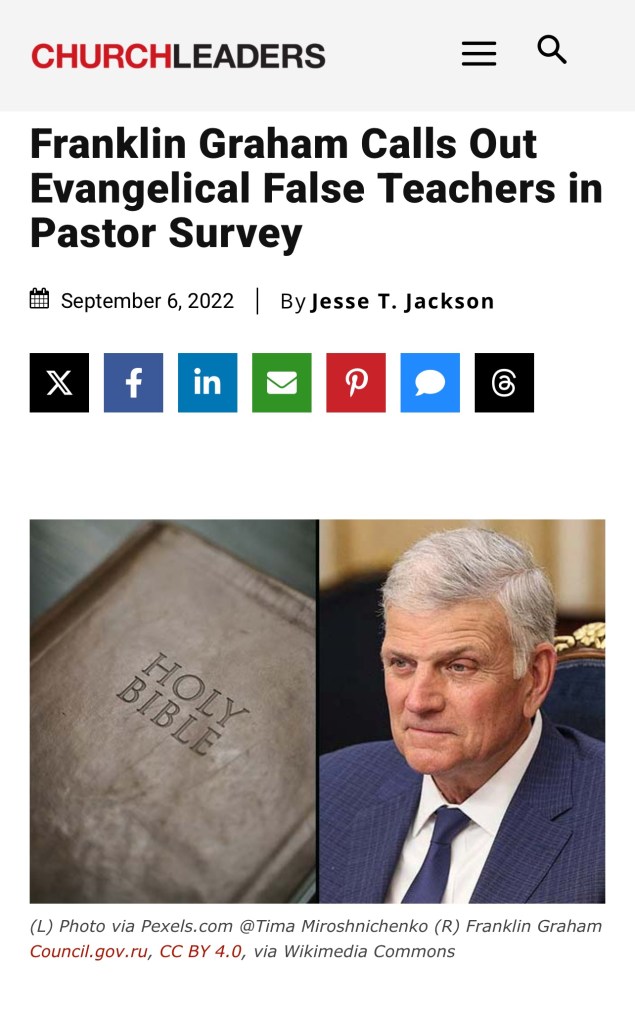
I say this as someone shaped by both Catholic and evangelical traditions. I’ve lived inside two communities that often misunderstand each other: evangelicals accusing Catholics of “works‑righteousness,” and Catholics seeing evangelicals as promoting “easy believism.” But when you actually sit with the New Testament, especially Paul, the picture is far more integrated than either side’s caricature.
Evangelicals love Ephesians 2:8–9 — and rightly so.
“By grace you have been saved through faith… not by works.”
But the sentence isn’t complete until verse 10:
“For we are God’s workmanship, created in Christ Jesus for good works.”
Paul isn’t contradicting himself. He’s describing the full arc of salvation: We are not saved by good works, but we are absolutely saved for them.
Even Romans — the letter most associated with justification by faith — refuses to separate faith from the life it produces. Romans 6–8 is Paul’s long meditation on what happens after justification: a life reshaped by the Spirit, a new obedience, a new creation. Grace is not passive. It is not a loophole. It is not a theological transaction. It is transformation.
This is where Graham’s framing feels too narrow. When salvation is reduced to a single moment of “accepting Christ,” it becomes easy to treat faith as something we possess rather than something that possesses us. Catholics have always emphasized that faith must be embodied in works of love. Evangelicals emphasize that salvation is by grace alone. But the New Testament holds these together without tension.
Paul never imagines a faith that justifies but does not also sanctify. James never imagines works that save apart from faith. Jesus never imagines discipleship without obedience.
So when a survey shows pastors disagreeing on certain doctrinal questions, the answer isn’t to label them “false teachers.” It’s to recognize that Christians have always interpreted Scripture through different lenses — historical, cultural, theological, pastoral. Interpretation isn’t a failure of faith. It’s the work of faith.
If anything, the diversity in the Barna survey should remind us that the church is broader than any one tradition’s doctrinal checklist. The real question isn’t whether pastors align with a particular worldview inventory. It’s whether their teaching leads people toward Christlikeness — toward the kind of faith Paul describes, the kind that expresses itself in love, justice, mercy, and good works prepared by God.
The gospel is bigger than the categories we use to measure it. And the grace that saves us is the same grace that calls us into a life that looks like Jesus.
There are moments in life when everything feels stripped down. When the noise fades, the routines fall away, and we’re left with ourselves— our desires, our fears, our habits, our hopes.
Scripture calls that place the wilderness.
It isn’t always a desert. Sometimes it’s a season of uncertainty, a time of waiting, a stretch of life where we feel exposed or unsettled.
But the wilderness is not only a place of testing. It is a place of becoming. A place where God gently reveals who we are— and who we are called to be.
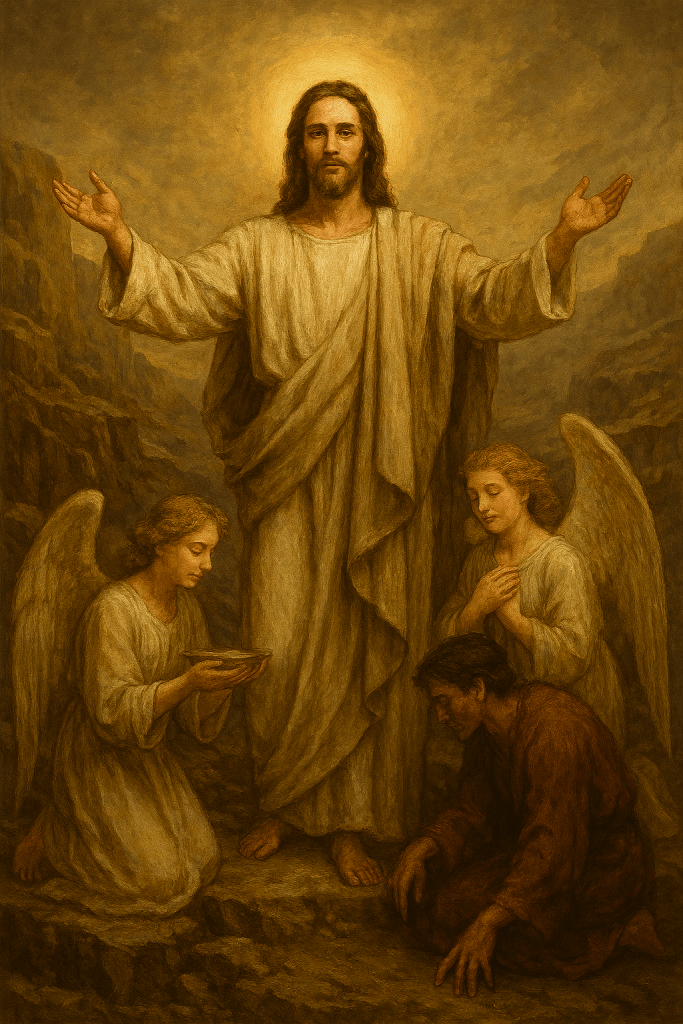
And in Matthew’s story of Jesus in the wilderness, we don’t just learn about Jesus. We learn about ourselves. We see the parts of us that want to be self‑made, the parts that want to be impressive, the parts that want control. But we also see the possibility of becoming someone different— someone more grounded, more faithful, more whole.
So we enter the story with one quiet question in our hearts:
Who are you becoming.
Self‑Made or God‑Directed
Jesus begins hungry—forty days hungry. And the tempter comes with a suggestion that sounds almost harmless:
“You have the power. Fix this yourself.”
It’s the temptation to be self‑made. To rely on our own strength, our own cleverness, our own ability to make things happen.
And I recognize that voice. The part of me that wants to handle everything alone. The part that trusts my gifts more than the Giver. The part that believes I can build my own life if I just try hard enough.
But Jesus shows another way. He refuses to turn stones into bread because he refuses to turn himself into the source of his own life.
He chooses to live by the Word that comes from God.
And that’s the invitation for us: to become people who depend on God— not passively, not irresponsibly— but with gratitude for the gifts we have and humility about the One who sustains us.
Scripture Truth or Spectacular Stunts
Then the scene shifts. The devil takes Jesus to the temple and quotes Scripture— not to reveal God’s heart, but to twist it.
“Jump. Make God catch you.Prove who you are.”
It’s the temptation to make faith loud, to make obedience impressive, to turn spirituality into a performance.
And again—I see myself. The part that wants to look good doing God’s work. The part that wants to be admired for being faithful. The part that can slip into hypocrisy without even noticing.
But Jesus refuses the stunt. He refuses to make God a prop. He refuses to turn trust into a test.
He chooses the quiet path— the path where faith is lived, not displayed.
And that’s the invitation for us: to become people who quietly do God’s will, without spectacle, without applause, without pretending to be more than we are.
Servant of God or the Devil
And then the final temptation. No subtlety now. Just a blunt offer:
“All the kingdoms.All the glory.All the power.Just bow.”
It’s the temptation to trade integrity for influence, to trade loyalty for success, to trade our soul for something that looks like a shortcut.
And Jesus answers with clarity and strength: “Away with you.Worship the Lord your God, and serve only him.”
And again—I see myself. The part that wants control. The part that wants to shape the world on my terms. The part that wants to be important.
But Jesus shows us that the kingdom of God cannot be gained by compromise. It cannot be built on ego. It cannot be won by bowing to anything less than God.
And that’s the invitation for us: to become people who are loyal to God— to truth, to love, to kindness, to the things that make us whole— and to refuse the voices that ask us to sell our soul for anything less.
The wilderness is not just a place Jesus went. It is a place we all know. A place where our desires are exposed, where our ego is revealed, where our loyalties are tested.
But it is also the place where we can become new.
A person who depends on God. A person who does good quietly. A person who worships with integrity.
The wilderness asks us—not harshly, but honestly—
Who are you becoming.
Closing Prayer
Holy God, You meet us in the wilderness— in the quiet places, in the honest places, in the places where our hearts are laid bare.
Give us the courage to depend on You when we are tempted to rely only on ourselves. Give us the humility to do Your will quietly when we are tempted to perform for others. Give us the strength to stay loyal to You when we are tempted by easier paths and louder promises.
Shape us into people who reflect Your truth, Your kindness, Your love.
And as we walk through our own wilderness, help us hear Your gentle question— and help us answer it with our lives:
A Pastoral-Theological Reflection on Digital Self-Doubt
I clicked on a Facebook ad without thinking much of it.
It named something familiar: distraction, procrastination, the slow, wandering path of creative work. The ad promised clarity in three minutes — a quick test to “understand my mind.” And because I’m a writer, and because I’m human, I tapped “Learn more.”
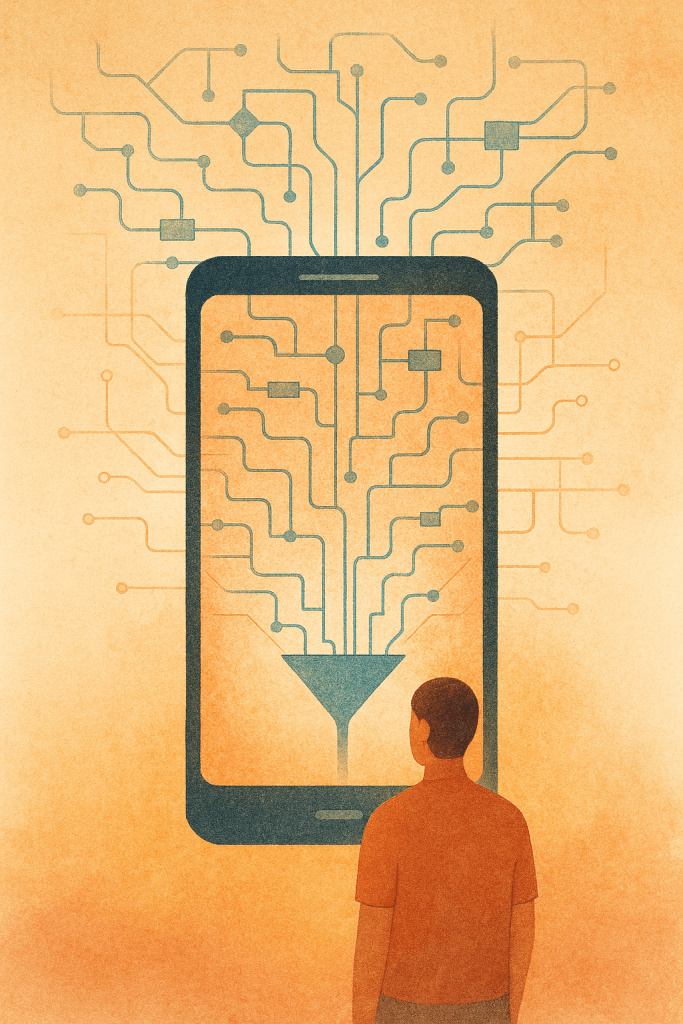
The quiz was simple enough. A few questions about focus, motivation, and forgetfulness. But as I moved through it, I felt something shift. The questions weren’t neutral. They nudged me toward interpreting ordinary human experiences as symptoms. And at the end, the quiz delivered its predetermined conclusion: You have ADHD. Conveniently followed by a counselor ready to help.
It wasn’t a diagnosis. It was a funnel.
And that realization became the real point of discernment.
The Digital Moment That Makes You Doubt Yourself
There’s a particular kind of vulnerability that digital platforms know how to exploit. It’s the moment when you’re tired, reflective, or simply curious enough to wonder:
Is this normal? Is something wrong with me?
The quiz didn’t just ask questions. It invited me to reinterpret my own humanity through the lens of pathology. It suggested that my creative rhythms — the circling, the pausing, the slow burn of writing — were signs of disorder rather than signs of craft.
That’s when I realized: The quiz wasn’t diagnosing me. It was shaping me.
The Oldest Temptation in a New Digital Form
Theologically, this moment echoes one of the oldest human vulnerabilities. In Genesis 3, the serpent doesn’t begin with rebellion. It begins with a question:
“Did God really say…?”
The goal is not information. The goal is destabilization.
Digital self‑diagnosis tools often function the same way:
“Do you really know yourself?”
“Are you sure this isn’t a disorder?”
“What if your normal struggles are actually pathology?”
The quiz becomes a mirror that distorts rather than reflects.
It whispers: Maybe you’re not who you think you are.
When Marketing Masquerades as Care
Pastoral theology insists on a crucial distinction:
Care is relational. Marketing is transactional.
A pastor, clinician, or spiritual director begins with you — your story, your history, your context, your dignity.
A digital funnel begins with your vulnerability — and moves you toward a product.
This is not to demonize technology. It’s to name the difference between:
discernment and diagnosis
relationship and retention
care and conversion metrics
When a quiz tells you who you are and then immediately offers a paid solution, it’s not practicing care. It’s practicing strategy.
The Human Reality: Not All Distraction Is Disorder
One of the quiet gifts of pastoral theology is its refusal to reduce the human person to symptoms.
Writers procrastinate. Artists wander. Pastors pause, reflect, and return. Humans get tired, overwhelmed, or bored.
None of this is inherently pathological.
In fact, much of what we call “distraction” is actually:
incubation
creative gestation
subconscious processing
the mind circling a truth it isn’t ready to articulate
My writing practice — slow, deliberate, recursive — is not evidence of ADHD. It’s evidence of craft.
The quiz didn’t reveal a diagnosis. It revealed a marketing strategy.
The Theological Core: You Are Not a Problem to Be Solved
Christian anthropology begins with a declaration:
“It is good.”
Before sin, before struggle, before distraction, before diagnosis — the human person is named as good.
Digital diagnostic culture reverses this order. It begins with:
“You are probably broken. Let us tell you how.”
Pastoral theology insists on the opposite:
“You are beloved. Let us discern what is happening within that belovedness.”
This doesn’t dismiss real mental‑health conditions. It simply refuses to let algorithms define the soul.
Discernment Over Diagnosis
A real ADHD assessment is relational, contextual, and careful. It involves:
a clinician
a history
a conversation
a story
a community
A three‑minute quiz cannot hold a human life.
But pastoral discernment can.
The question is not, Do I have ADHD? The deeper question is:
What is this moment revealing about how I understand myself?
And even deeper:
Who gets to name me?
A quiz? An ad? A marketing funnel? Or the God who calls you beloved?
A Pastoral Word for the Digital Age
We live in a time when algorithms try to tell us who we are before we’ve had a chance to remember whose we are.
Digital tools can help us. But they can also shrink us.
They can illuminate. But they can also distort.
And so the pastoral invitation is simple:
Be slow to let a screen define you. Be slower still to let it diagnose you. And be anchored in the truth that your identity is not a product of your
data, your habits, or your attention span — but of your belovedness.
Because at the end of the day, an algorithm can measure patterns, but it cannot hold a story.
It can track your clicks, but it cannot trace your calling.
It can predict your behavior, but it cannot perceive your soul.
Only relationship can do that.
Only community can do that.
Only God can do that.
So the next time a quiz tries to tell you who you are, pause.
Take a breath.
Remember that you are more than your browser history, more than your distractions, more than your productivity, more than your wandering mind.
You are a person in process.
A life unfolding.
A soul being shaped in ways no algorithm can quantify.
And perhaps the most pastoral thing we can say in this digital age is simply this:
Over the years, I’ve had countless conversations with conservative evangelical friends—some here in the United States, some back home in the Philippines—who sincerely believe that voting for Donald Trump and the Republican Party is the most faithful way to advance the pro‑life cause. Their conviction is real. Their desire to protect life is genuine. And I honor that.
But I’ve also noticed something else: many of these same friends have come to see abortion almost entirely through a political lens. The assumption is simple and deeply held: If we elect the right people, we will save more lives.
I understand the impulse. I, too, consider myself pro‑life, though with exceptions for rape, incest, and medically dangerous pregnancies. But I’ve never believed that political power alone can carry the moral weight of such a complex and deeply human issue.
A recent article in Christianity Today helped me understand why.
The piece examined abortion laws across the United States and found something striking: the strongest predictor of a state’s abortion policy is not how it votes, but how often its people attend church. States with high church attendance tend to have restrictive abortion laws. States with low attendance—even conservative ones—tend to protect abortion access.
The article’s conclusion was gentle but unmistakable: Evangelicals may have unintentionally weakened the pro‑life movement by making it primarily political rather than spiritual.
One line in particular stayed with me:
“Ultimately, if pro-life Christians can share the gospel and increase the number of churchgoers in their regions, they might be able to do more lasting good for the pro-life cause than any purely political strategy could accomplish.”
That sentence captures something I’ve been sensing for years.
Politics cannot do the work of discipleship
Many of my MAGA‑aligned friends believe that political victories are the key to cultural transformation. But the data suggests the opposite: politics tends to follow formation, not create it. When church life is strong, people’s moral imagination is shaped long before they enter a voting booth. When church life is weak, political strategies collapse—even in states that vote overwhelmingly conservative.
This is why we’ve seen pro‑life ballot measures fail in places where Republicans win easily. The political identity is strong, but the spiritual formation is thin.
A movement built on outrage cannot sustain compassion
I’ve also noticed that when abortion becomes primarily a political weapon, something precious is lost. Compassion becomes conditional. Nuance becomes suspect. Exceptions—like rape, incest, or life‑threatening pregnancies—are dismissed as “compromise.” And the women at the center of these stories disappear behind slogans.
This is not the way of Christ.
The Jesus I follow—the Jesus who drew me into the evangelical movement in the first place—never reduced people to issues. He never used moral questions as political leverage. He formed people through presence, community, and love.
What if the real pro‑life work is quieter?
What if the most effective pro‑life witness is not a voting bloc but a community of people who embody the compassion of Christ?
What if the real work is:
strengthening churches
supporting mothers
addressing poverty
expanding healthcare
reducing domestic violence
building communities where children are welcomed, not feared
These are not partisan ideas. They are deeply Christian ones.
A word to my friends who care deeply about life
I know your heart. I know your sincerity. I know you want to protect the unborn. But I hope this article—and this reflection—opens a small window to a larger truth:
Political victories cannot replace spiritual formation. Legislation cannot replace discipleship. And no candidate, no matter how loudly they claim to be “pro‑life,” can do the work the church has neglected.
If we truly want to cultivate a culture of life, we must begin not at the ballot box but at the table, in the pews, in our neighborhoods, and in the quiet, unglamorous work of loving people well.
That is where lasting change begins. And that is where the way of Christ still leads.
I’ve been learning more about Arizona lately, and my admiration for the state keeps growing.
One story that really stayed with me comes from the Dunbar Spring neighborhood in Tucson.
Years ago, a small group of residents there began experimenting with rainwater harvesting — long before it was common or even fully legal.
They believed that the water falling on their roofs and streets shouldn’t be wasted. It could nourish their gardens, cool their streets, and support a healthier way of living.
Their commitment didn’t stop at their own homes. They worked with city leaders, pushed for policy changes, and helped make rainwater harvesting not only legal but encouraged throughout Arizona.
Today, Dunbar Spring is known for its native plants, shaded walkways, and a community culture built around caring for the land.
Meanwhile, here in Las Vegas, collecting rainwater isn’t allowed. It makes me appreciate even more how Arizona treats water as something to be stewarded, not discarded. There’s a quiet wisdom in that — a way of living that feels both humble and forward‑thinking.
It’s inspiring to see a place where sustainability isn’t just a slogan, but a lived practice.
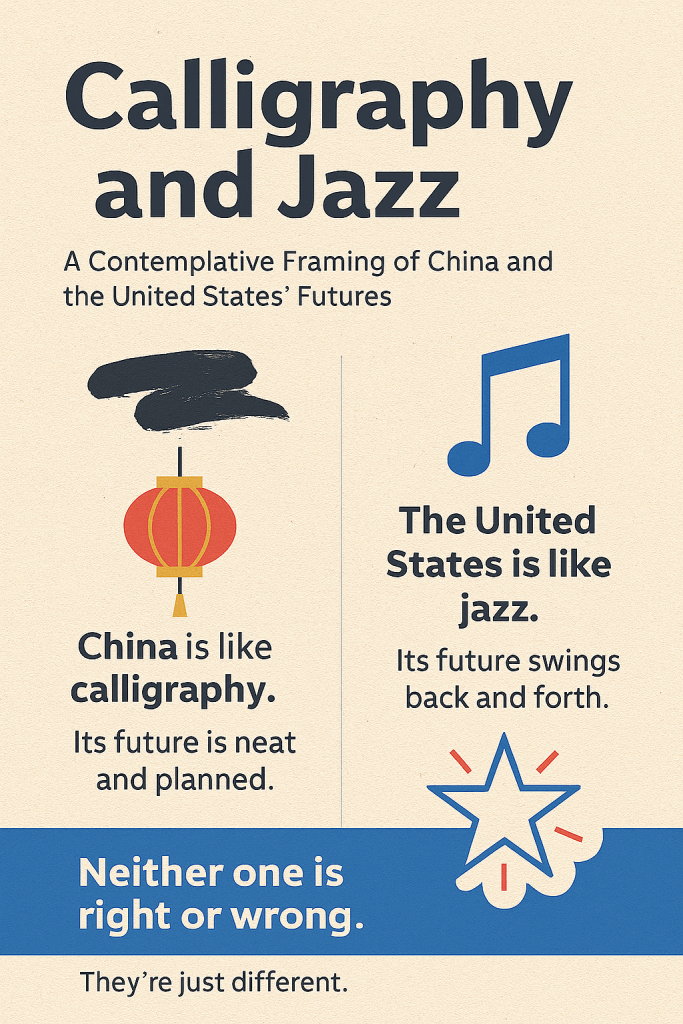
China and the United States are two big countries with very different ways of doing things. Imagine China as someone painting with a brush—slow, careful, and steady. Now picture the U.S. as a jazz musician—fast, creative, and always changing the tune.
China plans far ahead. Its leaders build cities, trains, and technology with long-term goals. They don’t change direction often, and they like things to stay organized. People follow rules, and the government makes most of the big decisions.
The U.S. is more like a jam session. Every few years, a new president comes in and changes the song. Some people love the freedom to speak up and try new ideas. Others feel frustrated when plans get reversed and progress gets delayed.
China’s way can feel calm and powerful—but it doesn’t always let people speak freely. The U.S. can feel exciting and full of choices—but sometimes it’s messy and hard to agree on things.
Both countries have strengths. Both have problems. And both are trying to shape the future in their own way.
So instead of asking which one is better, maybe we can learn from both. From China’s steady brushstrokes, we learn patience and planning. From America’s jazz notes, we learn creativity and courage.
Together, they show us that the world needs both rhythm and reason. And maybe, just maybe, we can find a new way to play—one that brings out the best in everyone.
I’ve been reflecting on something that science and faith seem to agree on: when the brain goes quiet, consciousness doesn’t disappear—it returns to something bigger.
A 2025 study published in Nature Human Behaviour found that under deep anesthesia, the brain’s unique “fingerprint”—the pattern that makes you you—completely fades (Nature Human Behaviour, 2025). The networks that hold your memories, your sense of self, your story… they all go silent. And yet, when the anesthesia wears off, your awareness returns. Your “I Am” comes back.
This has led some scientists to ask: maybe the brain doesn’t ‘create’ consciousness. Maybe it ‘conducts’ it—like a radio tuning into a signal. When the radio breaks, the signal doesn’t vanish. It just stops being heard through that device.
Dr. Stuart Hameroff (Hameroff, 2022) and physicist Sir Roger Penrose (Penrose, 1994) believe that consciousness flows through quantum processes in the brain’s microtubules. When those processes collapse, awareness fades. When they restart, the self returns.
I’ve also seen research by Dr. Robert Hesse and The Contemplative Network showing that prayer, compassion, and forgiveness increase coherence in both brain and heart rhythms (Hesse, 2023). That means these spiritual practices may help us tune into the field of consciousness more clearly. Maybe faith isn’t just belief—it’s a way of aligning with something real and measurable.
So what happens when the brain dies?
If the brain is a conductor, then death isn’t the end of consciousness. It’s the moment when the signal returns fully to the field. The “I Am” may dissolve into something universal. Or—if Christ’s resurrection was historical—it may be retrieved. Not just remembered, but reawakened.
The resurrection, to me, is more than a miracle. It’s a message: that our identity is not lost in death. It’s held. It’s known. It can be restored.
“In God we live and move and have our being.” (Acts 17:28)
Science and faith are not enemies. They’re two ways of describing the same mystery. And when the brain goes silent, consciousness does not fade into nothing. It fades into everything.
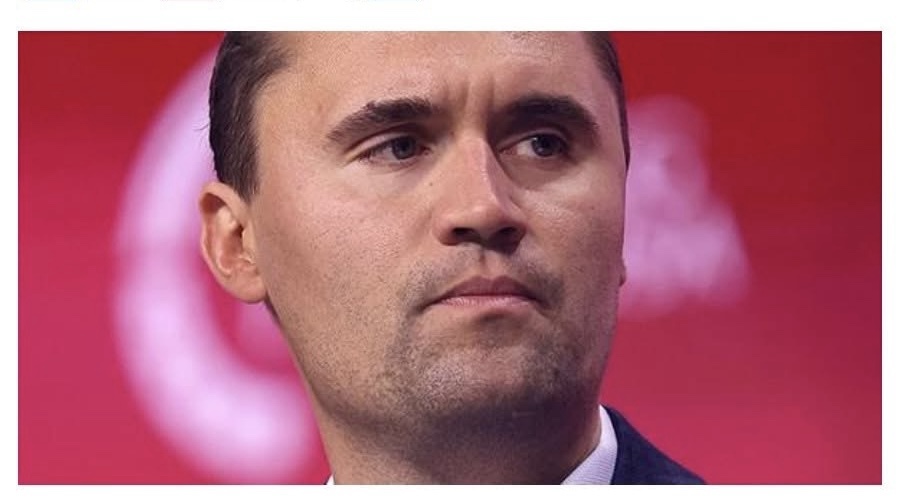
In the wake of Charlie Kirk’s tragic death, many in the evangelical world have rushed to memorialize him as a bold truth-teller and defender of Christian values. But for Black communities and their allies, this moment demands more than mourning—it demands honesty.
Kirk’s legacy, like that of 19th-century theologian Robert L. Dabney, is a study in contradiction. Both men were articulate defenders of Christian orthodoxy. Both were also unapologetic opponents of Black dignity and testimony. Dabney, revered in Reformed circles, wrote extensively in defense of slavery and white supremacy. Kirk, in more modern terms, used his platform to undermine Black narratives, often cloaking his rhetoric in appeals to free speech and patriotism.
Theological brilliance cannot excuse moral blindness. As Black theologians like James Cone and Willie Jennings have long argued, any theology that ignores the suffering of the oppressed is not merely incomplete—it is complicit. Cone’s Black Liberation Theology reframed the gospel as a message of emancipation, not empire. Jennings exposed how Western theology has historically been entangled with racial hierarchies and colonial power.
Today, communities are reckoning with these legacies. Churches are revisiting the heroes they once celebrated. Seminaries are re-evaluating the texts they teach. And Black scholars are offering counter-narratives that center truth, justice, and memory.
This is not about erasing history. It’s about telling the whole story. Mourning Kirk’s death should not mean silencing the voices he spent his life opposing. Sympathy and accountability are not mutually exclusive. If we are to move forward, we must confront the theological traditions that have too often sanctified exclusion—and listen to the communities that have borne the cost.
Some stories in Scripture don’t just teach—they wake us up. The Parable of the Talents is one of those stories. It’s not just about money or productivity. It’s about readiness. It’s about trust. It’s about knowing the Master—and being known by him.
Jesus tells this parable to help us understand what it means to live faithfully while we wait for his return. And he doesn’t give us a checklist. He gives us a story. A story about a master, three servants, and the difference between trust and fear.
The Master Goes Away
Jesus begins:
“For it is as if a man, going on a journey, summoned his slaves and entrusted his property to them…” (Matthew 25:14)
The man in the story is clearly a stand-in for Jesus himself. He’s going away—but not forever. His departure points to his death, resurrection, and ascension. And his return? That’s the hope we live by.
This is the truth we proclaim every time we gather at the Lord’s Table:
“Christ has died. Christ is risen. Christ will come again.”
That’s the arc of our faith—the sweep of salvation history. And we live in the “in-between”—between resurrection and return. In that space, we’re not called to wait passively. We’re entrusted with something. Something valuable. Something that belongs to the Master.
Serving the Master Is Not Optional
The servants in the parable aren’t given suggestions. They’re given responsibility. And not just any responsibility—they’re entrusted with the Master’s own property.
The Greek word used here for “slave” is δοῦλος1 (doulos)—a bond-slave. Someone who willingly and wholeheartedly offers themselves to serve a chosen master. Strong’s Greek word studies says this term is used with the highest dignity in the New Testament—referring to believers who live under Christ’s authority as devoted followers.
That’s us. Jesus is our Master. We are his doulos. And serving him? Not optional. He owns everything. We own nothing. Everything we have—our time, our gifts, our breath—is his.
What Are We Entrusted With?
In the parable, the master entrusts his servants with talents.2 These aren’t skills or abilities—though the word has come to mean that in English. In Jesus’ time, a talent was a weight of precious metal—gold, silver, or bronze—used as currency. So we’re talking serious value.
What matters most is what the servants *do* with those talents. That’s what reveals their trustworthiness.
“The one who had received the five talents went off and traded with them and made five more talents. In the same way, the one who had the two talents made two more talents.” (Matthew 25:16–17)
They doubled what they were given. That’s a 100% return. Pretty impressive, especially compared to today’s investment benchmarks.
But the point isn’t the percentage. It’s the faithfulness. The Master is pleased with both servants and says:
“Well done, good and trustworthy slave… enter into the joy of your master.” (Matthew 25:21)
They didn’t just manage money. They honored the Master. They lived awake.
The Servant Who Buried His Talent
Now let’s talk about the third servant—the one who buried his talent like it was radioactive.
Why did he hide it?
“Master, I knew that you were a harsh man… so I was afraid, and I went and hid your talent in the ground.” (Matthew 25:24–25)
He didn’t know his Master. He misjudged him. And he tried to *judge* him. But that’s not the role of a servant. The Master is the judge.
Even if the Master reaps where he didn’t sow, he doesn’t keep the harvest for himself—he gives it back to the faithful. The buried talent is taken and given to the servant with ten:
“Take the talent from him and give it to the one with ten talents.” (Matthew 25:28)
The Master doesn’t condemn him for failing to double the investment. He condemns him for doing *nothing*. He could’ve put it in a savings account with 4% interest. But instead, he buried it.
And so the Master says:
“You wicked and lazy slave!” (Matthew 25:26)
Lazy and wicked. And it all stems from not knowing the Master—not trusting his character, not believing in his generosity.
Judgment and Joy
“Throw him into the outer darkness, where there will be weeping and gnashing of teeth.” (Matthew 25:30)
While the good and trustworthy servants are welcomed into the joy of their Master, this one is cast out—into sorrow and regret.
So we ask:
Does the Lord know me? Do I know the Lord?
This isn’t about working for salvation. It’s about relationship. Jesus says in Matthew 7:
“Not everyone who says to me, ‘Lord, Lord,’ will enter the kingdom of heaven… I never knew you.” (Matthew 7:21–23)
Being “known” by Jesus is the foundation. Work without relationship is just noise. But faith—faith that flows from knowing the Master—produces fruit.
The Joy of the Master
The fullness of the Kingdom—the joy, the celebration, the life made perfect—is found in his presence. And serving him isn’t just for his glory. It’s for our good.
He doesn’t need anything from us—but he delights in giving everything to us.
So let’s live awake. Let’s live ready. Let’s live faithful.
Maranatha! O Lord, come!
__________
Footnotes:
1. Strong’s Greek: 1401. δοῦλος (*doulos*) — a slave ([bibleapps.com](https://bibleapps.com))
2. The Four Coins Jesus Knew – CoinsWeekly; see also v. 27, “money” is used for talents













 PENnED